Historical sanctuary
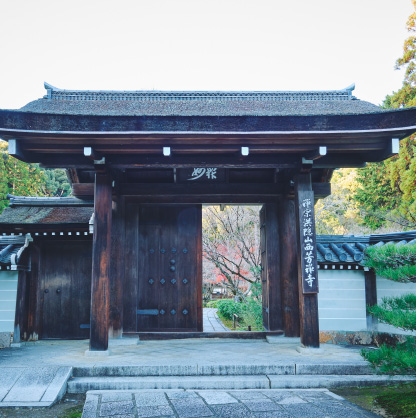
Shumyo Gate, Saiho-ji
Shumyo Gate is Saiho-ji's restored entrance, where the reservation-based moss-temple visit shifts from outside arrival into a named Zen threshold.
At a glance
- Official sourceintosaihoji.com
- Citations8 citations
- Hero imageOfficial site image via official-site
- Latest source check2026-04-25
How to read this place: Shumyo Gate combines entry control, Zen wording, restored gate form, and Saiho-ji's moss-garden route.
Plan your visit
A modest Zen threshold where name, roof form, and controlled entry set the tone for Saiho-ji
Respect essentials
What stands out
Why this place matters
Historical background
History
Shumyo Gate belongs to Saiho-ji, the Kyoto temple widely known as Koke-dera, inside the Historic Monuments of Ancient Kyoto World Heritage property. UNESCO places Kyoto's religious architecture and garden art within more than a thousand years of Japanese cultural development, and Saiho-ji is one of the religious components in that wider story. The gate's own history is smaller in scale but precise. The official Saihoji guide identifies Shumyo Gate as the entrance visitors use today, a hirakara-style gate with a gabled cypress-bark roof restored in the Showa era. That makes it a modern restored threshold carrying an older temple name.
The name reaches deeper into Saiho-ji memory. The official guide explains that when Muso Kokushi rebuilt the temple in the 14th century, one of the Saihoji Temple Ten Sites of noteworthy places was called Shumyo Gate. The current gate inherited that name when it was rebuilt. The guide also connects the word shumyo to a phrase in Lao Tzu about the gate of all wonders and the source of all things. The present structure is therefore not an untouched medieval gate, but it preserves a named threshold from the temple's historical vocabulary and gives that name a visible place in the modern visitor route.
The gate's history is inseparable from Muso Kokushi's reshaping of Saiho-ji. The official garden essay states that Muso built the dry landscape garden in 1339 and treated the garden itself as a Zen training ground. It also notes that the lower garden centers on the Golden Pond and that the upper dry garden influenced later Japanese garden history. Shumyo Gate stands at the edge of that world. It does not contain the garden's main artistic claims, but it marks the shift from ordinary arrival into a temple landscape whose stones, water, moss, paths, and names carry religious and aesthetic memory.
Saiho-ji's later history changed the meaning of entrance. The official guide notes that the main gate has been closed for more than 40 years since the temple introduced its reservation-based visiting policy in 1977, after a period when Saiho-ji had extremely high visitor numbers among Kyoto temples. In that context, Shumyo Gate became the practical visitor threshold. Its historical role is now tied to managed access, quiet arrival, and the temple's effort to protect the moss garden and religious atmosphere. The gate helps visitors experience conservation policy as part of the site, not as a rule outside the sacred place.
UNESCO's Kyoto listing values religious establishments, wooden architecture, and garden design across many centuries, while the Saihoji guide gives the gate its component-level history. Together they explain why this small structure deserves its own attention. Shumyo Gate is a restored entrance, a named inheritance from Muso Kokushi's medieval temple landscape, and a modern control point for a protected Zen garden visit. Its significance depends on sequence. A visitor arrives by reservation, passes through a named gate, and then moves into the gardens, halls, and moss-covered precinct. The gate holds the first moment of that historical and religious sequence.
The official garden material also places the gate in a longer cycle of damage, survival, and care. Saiho-ji's structures suffered in the Onin-Bunmei War, floods affected the temple in later eras, and moss flourished toward the late Edo period. The present entrance is part of a site where reconstruction and conservation are normal historical facts, not signs of weakness. UNESCO's Kyoto listing explains that Japanese religious buildings and gardens are often maintained through careful repair using traditional forms and materials. Shumyo Gate fits that tradition as a restored wooden threshold that keeps an inherited name and guides visitors into a protected garden.
The gate also belongs to the modern history of visitor management at Saiho-ji. The official guide says the old main gate has remained closed for decades after the reservation policy began, while Shumyo Gate is the entrance used by visitors. That shift is historically meaningful because it changed how people encounter the temple. The first architectural act is no longer a free-flowing tourist approach; it is a scheduled crossing into a quieter precinct. The gate records that change in wood, roof, route, and name. Its history is therefore both medieval in memory and modern in function.
Sacred meaning
Sacred context
Shumyo Gate's sacred context is the act of crossing into Saiho-ji's Zen temple grounds. The official guide gives the name a philosophical charge by linking it to Lao Tzu's phrase about the gate of all wonders and the source of all things. In practice, the gate turns that phrase into a physical threshold. Visitors pass from scheduled arrival into a temple landscape shaped by Muso Kokushi's Zen garden, the Golden Pond, halls, tea houses, moss, water, and stone arrangements. The sacred meaning is not loud; it is in the controlled movement from outside business into quiet attention.
The etiquette follows the gate's role. Saiho-ji's current visitor system is reservation-based, and the official guide connects closed-gate management with protection of the temple approach and moss environment. Shumyo Gate should not be treated as a photo stop detached from the route. It is the first named point in a managed visit to an active temple and World Heritage garden. Arrive on time, keep the threshold clear, follow staff instructions, and let the entry sequence set a quieter pace before the garden path begins.
The gate also frames the garden as practice. The official Saihoji material says Muso Kokushi understood the garden as a training ground for Zen practitioners, with the dry landscape garden expressing Zen spirituality. Shumyo Gate does not need grand scale to matter; it prepares the visitor for a site where moss, pond, stones, water, and seasonal change are part of contemplative attention. The most respectful response is simple: move slowly, speak softly, keep to the permitted route, and treat the gate as the beginning of a sacred garden experience, not as a decorative object.
The gate's name also gives visitors a useful mindset. The official guide's Lao Tzu reference points to mystery and origin, while Saiho-ji's Zen garden material points to training, attention, and spiritual discipline. Those are not identical traditions, but the temple uses the inherited name as part of its own landscape vocabulary. Visitors do not need to perform anything special at the threshold. The respectful action is to let the crossing slow the body and attention before entering the moss garden, halls, pond landscape, and managed route.
Because Saiho-ji limits entry through reservations, etiquette is also a conservation practice. The gate is the place where private timing meets shared temple space. Keep groups compact, avoid blocking the roofed threshold, and do not treat staff direction as separate from the sacred visit. The official sources connect the visitor system with protection of a fragile temple garden. In that setting, order, quiet, and route discipline are not merely administrative. They are the practical conditions that allow the sacred garden experience to continue.
FAQ
Sources
- Official websitePrimary visitor-facing site for current access and institutional context.
- UNESCO entryPrimary authority source for the Ancient Kyoto serial property and its religious monuments.
- Wikipedia entryWikipedia article for Saihō-ji Temple.
- Historic Monuments of Ancient Kyoto (Kyoto, Uji and Otsu Cities) (Property 688)Primary authority source for the Ancient Kyoto serial property and its religious monuments.
- Saiho-ji Temple / Koke-dera (Q1516753)Entity anchor for the Kyoto Saiho-ji known as Koke-dera / Moss Temple, listed as an Ancient Kyoto component.
- Category:SaihoujiVisual context for Saiho-ji / Koke-dera as a moss garden and temple environment in Kyoto.
- Category:Buildings in Saiho-ji kokedera (Nishikyo Kyoto)Visual context for Saiho-ji's named buildings, halls, gates, and reconstructed structures.
- A Guide to SaihojiOfficial English guide to Saiho-ji's grounds describing Sairai-do, the gardens, Shumyo Gate, Kannon-do Hall, and related precinct features.
- Walking in a World Heritage GardenOfficial explanation of Saiho-ji's world-heritage garden history, Zen garden meaning, and Muromachi precinct structures.
- Category:Shumyo-mon, Saiho-jiVisual context for the Shumyo Gate at Saiho-ji.
- Saihō-ji TempleWikipedia article for Saihō-ji Temple.
Nearby places
Nearby sacred places in Japan

Bell Tower, Kinkaku-ji
A small Rokuon-ji sound marker that steadies the garden walk after Kinkaku's mirror-pond spectacle.

Bell Tower, Kiyomizu-dera
A small Kiyomizu-dera landmark that shifts attention from views to ritual time.

East Dormitory, Horyu-ji
A quieter Horyu-ji building where the long residential form beside Shoryoin points to the daily institution behind famous halls.

Golden Pavilion, Kinkaku-ji
Kinkaku-ji's Shariden, where a gold-leaf pavilion, pond reflection, relic-hall identity, and three-story symbolism make the famous view religious.
Keep exploring