Living sacred site
Wall Paintings of Genjo's Travels, Yakushi-ji
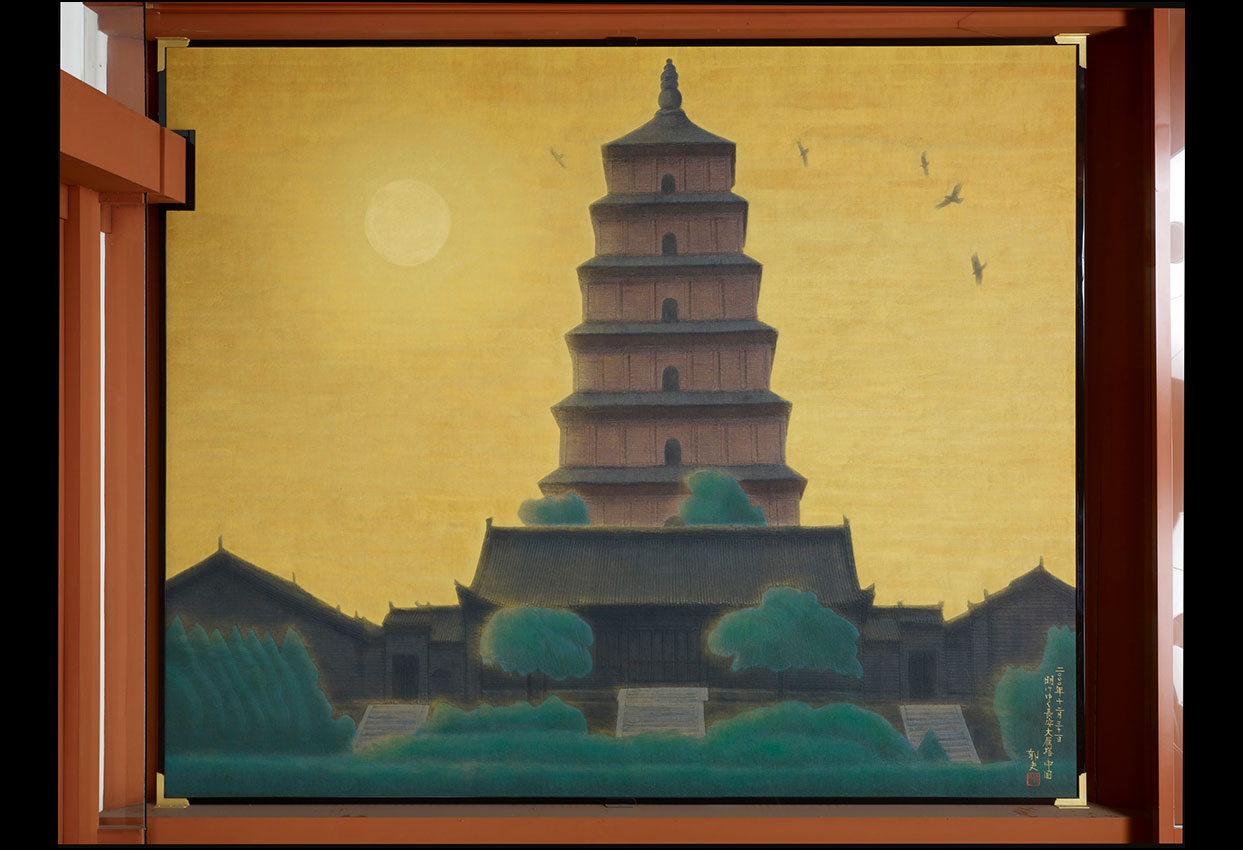
The Wall Paintings of Genjo's Travels are a Yakushi-ji mural cycle by Hirayama Ikuo in the Genjō Sanzōin Complex.
At a glance
- Official sourceyakushiji.or.jp
- Citations12 citations
- Hero imageOfficial site image via official-site
- Latest source check2026-04-25
How to read this place: The paintings belong to Genjō Sanzōin's temple route, where travel narrative, scripture memory, and hall setting meet.
Plan your visit
A modern mural cycle that turns Genjō's scripture journey into a temple-space narrative.
Respect essentials
What stands out
Why this place matters
Story and context
History and sacred context
FAQ
Sources
- Official websitePrimary visitor-facing site for current access and institutional context.
- UNESCO entryPrimary authority source for Ancient Nara as a sacred urban landscape of Buddhist temple precincts, a Shinto shrine, and a sacred forest.
- Wikipedia entryWikipedia article for Yakushi-ji Temple.
- Historic Monuments of Ancient Nara (Property 870)Primary authority source for Ancient Nara as a sacred urban landscape of Buddhist temple precincts, a Shinto shrine, and a sacred forest.
- Yakushi-ji Temple (Q945913)Parent entity anchor for Yakushi-ji as a Buddhist temple and component of the Ancient Nara world heritage property.
- Category:YakushijiVisual context for Yakushi-ji, its courts, halls, pagodas, and wider precinct.
- Toindo, Yakushiji (Q107020543)Entity anchor for Toindo as a National Treasure hall within Yakushi-ji.
- File:Yakushiji Nara08n4592.jpgCommons visual anchor for Toindo at Yakushi-ji, including file metadata that identifies the hall as a National Treasure within the world heritage precinct.
- ToindoOfficial Yakushi-ji page describing Toindo as an early hall with memorial purpose and a long devotional history.
- Category:Genjo-sanzoin, YakushijiVisual context for the Genjo Sanzoin precinct and its buildings within the northern area of Yakushi-ji.
- Genjo Sanzoin ComplexOfficial Yakushi-ji page describing the Genjo Sanzoin Complex as a group of buildings dedicated to Genjo and the Hosso lineage.
- Category:Jikido, YakushijiVisual context for the reconstructed Jikido at Yakushi-ji and its scale within the precinct.
- JikidoOfficial Yakushi-ji page describing the Jikido as the monks' dining hall and its present use for religious ceremonies, symposiums, concerts, and exhibitions.
- Wall Paintings of Genjo's TravelsOfficial Yakushi-ji page describing Hirayama Ikuo's mural cycle in the Genjo Sanzoin Complex and its sacred narrative focus on Genjo's travels.
- Yakushi-ji TempleWikipedia article for Yakushi-ji Temple.
Nearby places
Nearby sacred places in Japan

Amida Triad and Other Paintings, Yakushi-ji
Yakushi-ji's Jikidō painting program, where the Amida Triad and Buddhist transmission scenes turn the hall into a devotional interior.

East Pagoda, Yakushi-ji
Yakushi-ji's surviving ancient pagoda, where roof rhythm and relic symbolism still define the precinct.

Sho-Kanzeon Bosatsu Statue, Yakushi-ji
Yakushi-ji's Shō-Kanzeon image, where Kannon devotion and early sculpture meet inside Tōindō.

Statue of Genjo, Yakushi-ji
Yakushi-ji's Genjō statue, where relic veneration and Hossō lineage memory meet.
Keep exploring