Living sacred site
Inoue Shrine (Mitarai Shrine), Shimogamo Shrine
Inoue Shrine, also called Mitarai Shrine, is a waterside purification shrine within Shimogamo where the pond, health prayer, and seasonal rites carry the meaning. Read it as active ritual infrastructure inside the grove, not as a scenic water feature.

At a glance
- Official sourceshimogamo-jinja.or.jp
- Citations6 citations
- Hero imageCC BY-SA 3.0 via wikimedia-commons
- Latest source check2026-04-25
How to read this place: Separate the shrine's official purification role from the pond setting, seasonal rites, and visitor etiquette so the article does not repeat the same water phrase.
Plan your visit
A small Kyoto shrine stop where water practice, bodily well-being, and Shimogamo's grove route meet at the pond edge
Respect essentials
What stands out
Why this place matters
Seasonal rites and health prayer still gather around Mitarai Pond as part of Shimogamo's living worship.
The small shrine gives visitors a direct view of how water, bodily well-being, and purification practice meet inside Shimogamo.
Its pond-side setting connects the larger shrine precinct with one specific ritual focus, giving water symbolism a concrete place.
Historical background
History
Inoue Shrine, also called Mitarai Shrine, belongs to Shimogamo Shrine, the Kamomioya-jinja component of UNESCO's Historic Monuments of Ancient Kyoto property. UNESCO's listing and map records place the parent shrine inside a protected Kyoto religious landscape, while the official Shimogamo page gives Inoue its local identity as a purification shrine connected with Mitarai Pond. That combination is the key historical frame. Inoue is not a free-standing destination with a separate monumental history. It is a small waterside shrine whose meaning depends on the older shrine precinct around it. The official account identifies the pond, purification role, health prayer, and summer observances that make the stop distinct. Its history is therefore a history of water practice inside a major shrine setting: a named place where ritual cleansing, bodily well-being, and seasonal shrine life are given a stable location within Shimogamo.
The summer associations described by Shimogamo make Inoue especially important for understanding seasonal shrine history. A precinct is not only a set of buildings fixed in time; it is also a calendar of rites and repeated acts. Inoue preserves that calendar logic in a compact form. Its pond-side setting allows purification to be seen and practiced, while the official account connects the place with summer observances and prayer for health. The UNESCO records give the broader heritage frame, but they do not flatten the site into architecture alone. Inoue shows why small subsidiary places matter within an old shrine. They keep ritual purposes visible at the scale of a visitor's body: standing near water, making prayer, moving around others, and recognizing that the pond carries sacred use. That is a historical pattern as much as a devotional one.
The stop also helps preserve the route logic of Shimogamo. A visitor who moves from grove path to shrine building to pond edge can see that the precinct's history is carried through movement, not only through dates or architecture. Inoue is where that movement slows around water. The official shrine page gives the local reason for the pause, and the UNESCO records keep that pause attached to the larger Ancient Kyoto landscape. Historically, this matters because subsidiary shrines can show how a precinct is used at human scale. Inoue is not a broad summary of Shinto purification. It is a named Shimogamo place where purification, health prayer, pond setting, and seasonal rite memory meet. That local precision is enough to justify publication when the text stays source-backed and practical. It also gives visitors a grounded reason to include the stop in a route, even when no seasonal rite is taking place. The pond-side setting keeps the official purification role visible year-round.
Sacred meaning
Sacred context
Inoue's sacred context is inseparable from Mitarai Pond. Shimogamo's official account identifies the shrine as a purification place and ties it to prayer for health and summer observance, so visitors should treat the water edge as part of worship, not only as scenery. A respectful visit means leaving room for prayer, purification activity, and shrine movement before taking photographs or pausing for a view. The pond makes the sacred function visible, but it does not turn the place into a performance. Keep voices low, follow posted rules, and read the shrine and water together. The point is not to explain water symbolism in general, but to notice how this precinct gives purification a specific place.
The shrine also gives bodily well-being a ritual setting. The official page links the place with health prayer, and that focus changes how the stop should be approached. It is not merely a pretty pause between larger landmarks. It is a small station where worshippers may bring concern for the body into Shinto practice. That calls for practical etiquette: do not block the pond edge, do not interrupt people making offerings or prayer, and avoid treating seasonal rites as spectacle. The UNESCO frame helps place Inoue inside Ancient Kyoto, but the sacred meaning is local and active. Inoue asks visitors to recognize water, prayer, and health as one shrine context.
Inoue is especially useful for travelers tracing how Shimogamo layers sacred functions. The main precinct, grove route, and subsidiary shrines all carry different forms of attention. Inoue adds a water-focused form: purification practice held beside a pond within the same protected shrine landscape. The careful reading is simple and source-backed. Let the official account define the shrine's role, let the heritage records define the parent setting, and let current shrine etiquette shape behavior on site. A short stop can be enough if it respects the people using the space. Inoue's sacred value is found in that disciplined pause: water is not just seen, it is approached as part of living shrine practice.
Etiquette at Inoue should follow the shrine's water and purification role. Stay clear of anyone using the pond edge, do not treat ritual movement as a spectacle, and avoid inventing actions that the shrine has not invited. If summer observance is visible, give it space and let participants set the pace of the area. If no rite is happening, the place still deserves quiet because the official account identifies it as a living purification shrine. A visitor can learn a great deal by standing back: the pond, shrine, and route show how sacred water practice is held inside Shimogamo without needing dramatic explanation.
FAQ
Sources
- Official websitePrimary visitor-facing site for current access and institutional context.
- UNESCO entryPrimary authority source for the Ancient Kyoto serial property and its religious monuments.
- Wikipedia entryWikipedia article for Shimogamo Shrine.
- Historic Monuments of Ancient Kyoto (Kyoto, Uji and Otsu Cities) (Property 688)Primary authority source for the Ancient Kyoto serial property and its religious monuments.
- Historic Monuments of Ancient Kyoto - MapsComponent map source identifying Kamomioya-jinja within the Ancient Kyoto property.
- Shimogamo Shrine (Q701620)Parent entity anchor for Shimogamo Shrine as an Ancient Kyoto world-heritage component, with listed parts including the East Main Shrine, West Main Shrine, and Kawai Shrine.
- Category:Shimogamo-jinjaVisual context for Shimogamo Shrine, its main sanctuaries, branch shrines, gates, sacred grove, and water features.
- Purification ShrineOfficial Shimogamo Shrine page describing Inoue Shrine (Mitarai Shrine), its purification role, the surrounding Mitarai Pond, and the shrine's associated summer rites.
- Shimogamo ShrineWikipedia article for Shimogamo Shrine.
Nearby places
Nearby sacred places in Japan

Hashidono Hall, Kamigamo Jinja
A small Kamigamo Jinja forecourt structure that turns a stream crossing into part of the shrine's ordered approach.
Mitarai Pond, Shimogamo Shrine
A small Shimogamo water edge where visitors encounter cleansing practice at ground level.
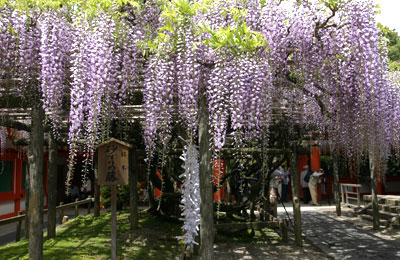
Sunazuri-no-Fuji, Kasuga-taisha
Kasuga-taisha's old gate-side drooping wisteria, known for spring clusters that nearly brush the sand.

East Corridor, Itsukushima Shrine
Itsukushima's east-side passage turns a walk over the tidal edge into a measured approach through roof, posts, sea, and shrine order.
Regional journeys
Journeys in Japan
Keep exploring