Living sacred site
Mitarai Pond, Shimogamo Shrine
Mitarai Pond at Shimogamo Shrine is a ritual water site in the shrine precinct, associated with bubbling spring water, cleansing rites, foot-soaking, seasonal observance, and good-health prayer. Its value is not size or scenery; the official Shimogamo source shows how a compact water feature can carry a precise devotional role inside the larger grove-and-shrine landscape.

At a glance
- Official sourceshimogamo-jinja.or.jp
- Citations6 citations
- Hero imageCC BY-SA 3.0 via wikimedia-commons
- Latest source check2026-04-25
How to read this place: Purification practice gives Mitarai Pond its religious meaning.
Plan your visit
A ritual stop where a modest water feature carries purification, festival memory, and bodily prayer.
Respect essentials
What stands out
Why this place matters
Within the Ancient Kyoto World Heritage setting, Mitarai Pond remains legible as one of Shimogamo's active purification waters.
The pond gives cleansing practice a specific place in the visitor route, close to Inoue Shrine and the grove paths.
Because Shimogamo is a large shrine landscape, the pond helps visitors notice how small ritual stations carry specific devotional roles.
Historical background
History
Mitarai Pond is a small ritual water site inside Shimogamo Shrine, but its history is tied to the same World Heritage component that gives Kamomioya-jinja its wider public frame. UNESCO identifies Shimogamo as part of the Historic Monuments of Ancient Kyoto, while the official shrine page for purification names Mitarai Pond as the place where pure water bubbles up near Inoue Shrine. This is the first historical point a visitor needs: the pond is not an ornamental pool added to a scenic shrine walk. It belongs to a long ritual landscape where water, purification, seasonal observance, and shrine movement are connected.
The official Shimogamo account gives the pond a more specific role by linking it with cleansing practice and the Mitarai Festival. It notes that people place their feet in the water and pray for good health, and it connects the area with purification before important shrine rites. That history makes the pond different from larger Kyoto garden waters. Its value lies in use: the body approaches the water, steps into a rite, and links a physical sensation with prayer. The pond therefore preserves a practical history of purification within the shrine, not only a visual memory of water in a forested precinct.
Mitarai Pond also helps explain how Shimogamo's sacred precinct is built from many smaller ritual points. The Wikidata parent record identifies Shimogamo as the larger shrine entity, and the UNESCO map source places the component within Ancient Kyoto's protected set. Inside that larger frame, the pond acts as a threshold experience within the shrine route. Visitors move between gates, grove, shrines, water, and main-sanctuary approaches. The pond's history belongs to that ordered movement. It teaches that purification is not an abstract idea at Shimogamo; it is tied to a named water place, seasonal custom, and repeated movement through the precinct.
The pond's public identity also includes festival memory and everyday shrine visitation. A traveler may arrive on a quiet day and see only a modest water edge, but the official shrine account records seasonal practices that temporarily change the space's meaning and crowd pattern. This is why the page should avoid treating the site as a photo stop or food association. The pond's name and water are bound to purification, health prayer, and shrine order. Commons imagery can help visitors recognize the precinct, but the authority for interpreting the pond is the shrine's own explanation of its cleansing rites and festival use.
In modern heritage terms, Mitarai Pond shows how a small feature can carry serious interpretive weight. UNESCO's Ancient Kyoto listing often directs attention to major monuments, but the actual shrine visit depends on minor spaces where ritual practice becomes visible. Mitarai Pond is one of those places. It joins spring water, Inoue Shrine, shrine routes, and seasonal observance in a compact setting. A useful history section should make that compactness clear. The pond matters because it lets visitors see purification as an embodied practice within Shimogamo, rooted in a named site and protected as part of the larger Kamomioya-jinja landscape.
The pond is also tied to the way Shimogamo turns natural elements into ritual places. Water is not incidental in the official account: it bubbles up, receives bodies during purification practice, and becomes the focus of prayer for health. That makes the pond historically useful even when no large building stands over it. The place records a relationship between shrine land and ritual action. Visitors can read the pond as a small archive of repeated practice, where water, season, and bodily movement preserve a kind of history that would be missed by a monument-only route.
Modern visitors also meet Mitarai Pond through the shrine's current management of ritual and public access. The official page gives the clearest authority for what the pond means today, while UNESCO supplies the protected Ancient Kyoto context. A page about the pond should use both scales. The larger World Heritage frame explains why Shimogamo matters in Kyoto's religious history; the official purification page explains why this particular water place matters inside Shimogamo. Together they keep the site from being flattened into scenery, festival trivia, or a snack association.
That route-based reading also explains why the pond needs dedicated interpretation. It is easy to pass it quickly, but the official shrine account preserves a distinct ritual memory at this point in the precinct. The pond gives the visit a material sign of cleansing before deeper shrine movement.
Sacred meaning
Sacred context
Mitarai Pond's sacred context is purification. The official shrine page describes pure water bubbling up and connects the place with cleansing rites, foot-soaking during the Mitarai Festival, and prayers for good health. Visitors should therefore approach the pond as a ritual water site inside a Shinto precinct, not as a scenic pause. The water's meaning is carried by the actions performed there: washing, stepping, praying, waiting, and letting the shrine's rhythm shape behavior.
Etiquette should be simple and observant. Keep clear of people taking part in purification practice, avoid treating the water edge as a prop for photographs, and follow shrine instructions during festival periods or crowded rites. The official material makes clear that the pond belongs to prayer and cleansing. UNESCO's protected-property frame adds that the wider setting is a heritage shrine landscape. Respect means leaving enough room for practice, keeping voices low, and letting ritual use outrank sightseeing.
A careful visit links the pond to the rest of Shimogamo. The water site, Inoue Shrine, grove paths, and main shrine approaches work together as a sequence of preparation and worship. That sequence is more useful than a quick stop. Pause before the water, look for posted rules, watch how local worshippers move, and avoid making claims beyond the shrine's own explanation of purification and health prayer. The sacred value of Mitarai Pond is modest in scale but precise: it turns the larger shrine's purity language into a place where water, body, and prayer meet.
The pond should also be understood through timing. On ordinary days, it may feel quiet and compact; during purification events, the same place can become a focused ritual zone. That shift is part of the sacred context. Visitors should avoid crowding the water edge, stepping where they are not invited, or turning participants into subjects for close photography. If a rite is underway, observation from a respectful distance is the safer choice.
Mitarai Pond's sacred value is strongest when visitors connect it to preparation. Water practice comes before deeper shrine movement, and the pond gives that preparation a visible form. The official Shimogamo description supports this reading through purification, festival, and health-prayer associations. Let the water site slow the visit: check signs, keep the path clear, do not touch or use the water casually, and let local practice decide what is appropriate. That restraint protects both the ritual meaning and the small physical setting.
That care is especially needed during busy periods, when practical crowd movement and ritual attention share the same edge of water.
FAQ
Sources
- Official websitePrimary visitor-facing site for current access and institutional context.
- UNESCO entryPrimary authority source for the Ancient Kyoto serial property and its religious monuments.
- Wikipedia entryWikipedia article for Shimogamo Shrine.
- Historic Monuments of Ancient Kyoto (Kyoto, Uji and Otsu Cities) (Property 688)Primary authority source for the Ancient Kyoto serial property and its religious monuments.
- Historic Monuments of Ancient Kyoto - MapsComponent map source identifying Kamomioya-jinja within the Ancient Kyoto property.
- Shimogamo Shrine (Q701620)Parent entity anchor for Shimogamo Shrine as an Ancient Kyoto world-heritage component, with listed parts including the East Main Shrine, West Main Shrine, and Kawai Shrine.
- Category:Shimogamo-jinjaVisual context for Shimogamo Shrine, its main sanctuaries, branch shrines, gates, sacred grove, and water features.
- Purification ShrineOfficial Shimogamo Shrine page describing Mitarai Pond, its bubbling pure water, the Mitarai Festival, Saiodai purification, and other cleansing rites.
- Shimogamo ShrineWikipedia article for Shimogamo Shrine.
Nearby places
Nearby sacred places in Japan

Hashidono Hall, Kamigamo Jinja
A small Kamigamo Jinja forecourt structure that turns a stream crossing into part of the shrine's ordered approach.
Inoue Shrine (Mitarai Shrine), Shimogamo Shrine
A quiet Shimogamo water stop where good-health prayer and summer observance give the pond edge ritual weight.
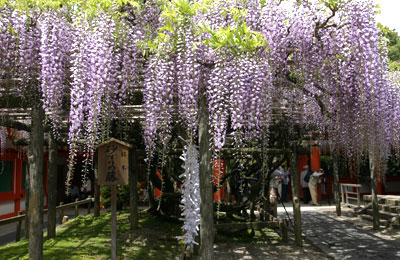
Sunazuri-no-Fuji, Kasuga-taisha
Kasuga-taisha's old gate-side drooping wisteria, known for spring clusters that nearly brush the sand.

East Corridor, Itsukushima Shrine
Itsukushima's east-side passage turns a walk over the tidal edge into a measured approach through roof, posts, sea, and shrine order.
Regional journeys
Journeys in Japan
Keep exploring