Living sacred site
Fushimi Inari Taisha
Fushimi Inari Taisha begins in a busy Kyoto base precinct and continues upward into Inariyama. Vermilion corridors, offering points, smaller shrines, business and family petitions, and a long stepped ascent turn the site into a living mountain worship route.

At a glance
- Official sourceinari.jp
- Citations7 citations
- Hero imageCC BY-SA 2.0 via wikimedia-commons
- Latest source check2026-06-19
How to read this place: Fushimi Inari needs Inari worship, the base shrine, prayer intentions, and Inariyama together, beyond the torii corridor alone.
Plan your visit
The head shrine of Inari worship, where the base precinct and torii-lined mountain route remain one sacred system
Respect essentials
What stands out
Why this place matters
Fushimi Inari Taisha has national importance in Inari worship, extending its role beyond a famous Kyoto torii route.
The official VR and shrine pages present Inariyama as part of the sacred precinct, with smaller shrines and worship points extending beyond the base halls.
The shrine links everyday petitions with mountain movement, making practical prayer and physical ascent part of the same experience.
Historical background
History
Fushimi Inari Taisha traces its own institutional beginning to 711, when Inari Okami was enshrined on Inariyama on the first Day of the Horse in the second month of the Nara period. That origin matters because the shrine is not only a later Kyoto landmark attached to red gates. It began with the mountain and with Inari worship, and the official account still ties the shrine's identity to a thirteen-century continuity that was publicly marked by the 1300th anniversary in 2011. The site's present fame can make the early date feel like background, but the shrine's visitor interpretation places it near the front: Inariyama is the place of enshrinement, the main base precinct is the public face of the shrine, and the mountain route keeps the foundation story physically present for anyone who climbs beyond the first corridors.
The shrine grew as the chief center of Inari devotion, a form of Shinto worship associated with rice, harvest, prosperity, household safety, traffic safety, and other practical wishes. The official English homepage describes Fushimi Inari Taisha as the head shrine connected with the many Inari shrines across Japan, while the FAQ notes that Inari shrines are said to number around 30,000. This national role helps explain why the Kyoto shrine is both local and wide-reaching. People come for a very specific place in Fushimi, but the institution also represents a devotional network whose images, offerings, fox messengers, vermilion color, and torii customs are recognized across the country. The familiar nickname O-inari-san, used by the shrine itself, points to a devotional intimacy that is broader than tourism and still recognizable in ordinary Japanese shrine culture.
Fushimi Inari's history also includes rank, court memory, and older texts. The FAQ explains that Inari Okami received the junior fifth rank from Emperor Junna in 827 and that the rank rose over time until Sho-ichii, the highest divine rank, was granted in 942. It also connects the shrine name to a surviving reference from the Yamashirokoku Fudoki, while acknowledging that other explanations exist. These details place the shrine inside a classical Japanese religious world in which local cult, imperial recognition, agricultural prayer, and place-name memory could reinforce one another. The shrine did not become important only because modern visitors photographed its gates. Its status was shaped through centuries of prayer, institutional recognition, and the continued authority of the mountain precinct.
The mountain route preserves later historical layers as well. The official FAQ records that a shrine once stood at the top of the mountain but burned during the Onin War in the fifteenth century, after which efforts to rebuild were followed by repeated destruction from causes such as storms. A shinseki, a place where the deity remains although the shrine building has gone, now marks that memory. The same FAQ notes that a temple called Aizenji existed in the precinct from the Genroku era in the late seventeenth century until the beginning of the Meiji period, after the mountain shrine had been destroyed. These fragments matter because they keep Fushimi Inari from looking timeless in a vague way. The route has suffered war, weather, religious reuse, and modern reorganization while retaining the idea that divine presence remains tied to named places on the mountain.
The torii corridors, now the most recognized visual feature, also carry a historical practice, not a decorative brand. The official FAQ states that torii became widely used as offerings by the start of the Edo period to express a wish for, or thanks for, prayers passing to the deity. It estimates that around 10,000 torii of varied sizes stand along the mountain paths. That custom connects personal and commercial petitions with the visible architecture of the route: each gate is part of a long history of request, gratitude, and maintenance. The shrine's present experience therefore developed through many small acts of devotion, not through one single building campaign. Visitors walking the corridors move through accumulated offerings that belong to a practice with early modern roots and current worship meaning. The same custom also explains why older and newer gates stand together. The path is renewed by continuing gifts, so its history remains visible as a sequence of names, dates, repairs, and prayers.
Sacred meaning
Sacred context
Fushimi Inari Taisha's sacred context begins with Inariyama. The official map text describes the whole mountain as part of the shrine precinct and identifies it as a holy mountain where smaller shrines, former shrine sites, worship stones, and torii are spread through the route. This means the visit should not be reduced to a hallway of gates. The mountain is part of the shrine's religious body, and the ascent links worship, movement, and repeated stopping places. A short visit around the base can still be meaningful, but the shrine's own interpretation makes clear that the upper paths are not an optional scenic add-on. They preserve the mountain setting from which Inari worship at this site began.
The main deity, Inari Okami, is approached through blessings tied to daily life. The official homepage names prayers for harvest, business prosperity, household safety, family wellbeing, and many other wishes, while the FAQ adds traffic safety, industry, performing arts, and marriage to the devotional range. That breadth is why the shrine can feel unusually busy and everyday: people are not only admiring a historic place, they are bringing work, family, movement, and luck into the precinct. The white fox figures should be read in that setting. The FAQ explains that foxes are messengers of Inari Okami, not the deity itself, and that their visibility belongs to shrine symbolism around an unseen divine presence.
Respectful behavior at Fushimi Inari follows from the fact that the grounds remain a worship space. The shrine's visitor request page calls the grounds a sacred area founded in 711 and asks visitors not to enter restricted buildings or fenced areas, damage gates or trees, block narrow paths with photography, eat while walking outside marked rest areas, bring pets except necessary assistance animals, or use costumes inappropriate for worship. These rules are practical, but they are also theological in effect: they protect the dignity of a place where worshippers, offerings, deities, and mountain nature meet. Etiquette should therefore be presented as official visitor guidance and shrine-level respect, not as a list of invented cultural tips.
The shrine's sacred rhythm is also seasonal and communal. The official homepage notes that traditional festivals and rituals are held through the year and that they recall Kyoto's long history as the old capital. The torii, stone offerings, smaller shrines, and festival cycle all give the precinct a layered rhythm: some visitors move through it in an hour, some climb slowly, some pray at particular points, and others return for annual observances. A strong page should help readers hold those layers together. Fushimi Inari is a famous image, a national head shrine, a mountain precinct, and an active place of personal petition at the same time.
FAQ
Sources
- Official websitePrimary visitor-facing site for current access and institutional context.
- Wikipedia entryWikipedia article for Fushimi Inari-taisha.
- Fushimi Inari-taisha (Q714828)Entity anchor for Fushimi Inari Taisha in Kyoto.
- Fushimi Inari TaishaOfficial English homepage with history, enshrined deities, festivals, map, and access.
- FAQOfficial English FAQ explaining present prayer intentions, Inari worship, and shrine practice.
- AccessOfficial access guidance for train, bus, and car arrival at Fushimi Inari Taisha.
- Request for All VisitorsOfficial visitor conduct rules for the sacred shrine grounds, including restricted areas, photography, food, pets, and path behavior.
- Fushimi Inari Taisha VROfficial precinct overview describing the main shrine structures and mountain sacred setting.
- Fushimi Inari-taishaWikipedia article for Fushimi Inari-taisha.
Nearby places
Nearby sacred places in Japan

Futarasan Shrine
A Nikko mountain shrine where forest paths, threshold moments, bridge memory, and sacred peaks make the worship geography larger than the buildings.

Itsukushima Shrine
A tide-shaped Shinto shrine where sea, island, corridors, and mountain backdrop form one sacred scene.
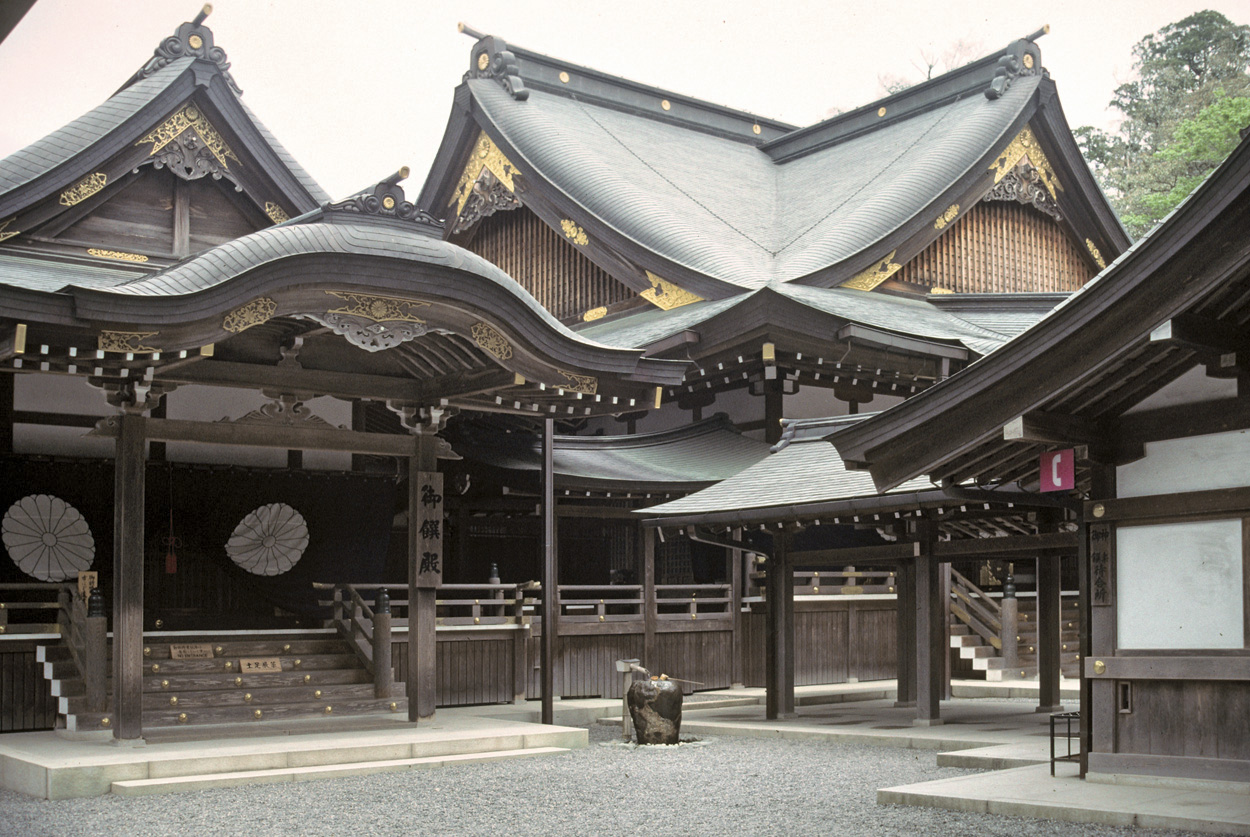
Ise Jingu
Japan's central Shinto sanctuary system, where Naiku, Geku, forest paths, deities, and annual rites shape the visit.
.jpg)
Kasuga-taisha
Nara's lantern-lined Shinto shrine, set where forest path, vermilion sanctuary buildings, and worship routes converge.
Regional journeys
Journeys in Japan
Kasuga-taisha Shrine Sequence
A Kasuga Taisha route through torii approach, subsidiary shrine, lantern hall, cloister, and worship-viewing space inside Nara's shrine landscape.
Itsukushima Shrine Sacred Sequence
An Itsukushima route through island shrine context, subsidiary devotion, corridor movement, main-sanctuary space, and the great torii threshold.
Keep exploring