Living sacred site
Ise Jingu
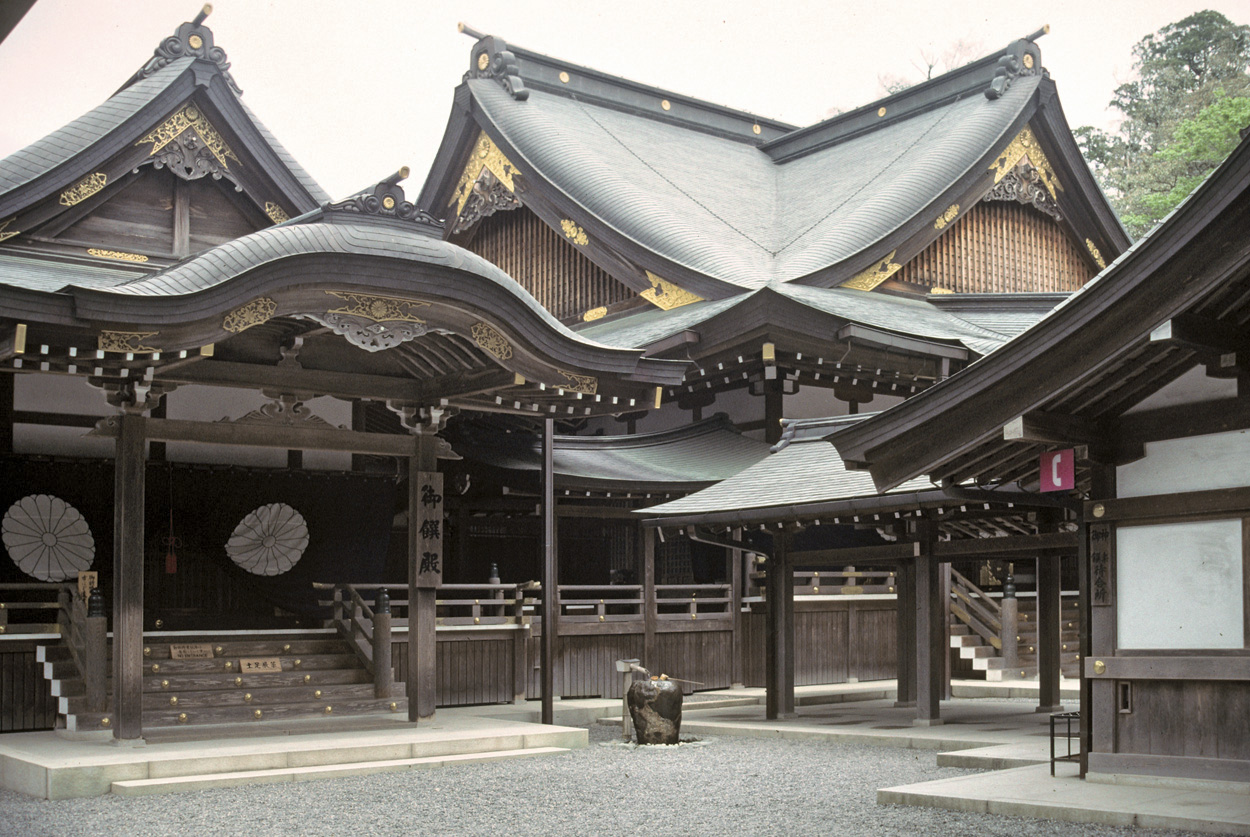
Ise Jingu is a living Shinto sanctuary system of 125 shrines in Mie Prefecture, centered on Naiku and Geku, with Amaterasu-Omikami, Toyouke-no-Omikami, forest approaches, Ujibashi, annual rites, and ritual renewal at its core.
At a glance
- Official sourceisejingu.or.jp
- Citations7 citations
- Hero imagePublic domain via wikimedia-commons
- Latest source check2026-06-19
How to read this place: Ise works as a whole sanctuary system, with Naiku and Geku as central nodes in a larger network of shrines and approaches.
Plan your visit
A Shinto sanctuary system where deity worship, forest thresholds, annual rites, and renewal practice remain inseparable.
Respect essentials
What stands out
Why this place matters
Ise Jingu's importance comes from the whole sanctuary network, with Naiku, Geku, and associated shrines forming one sacred system.
The official overview ties that system to deity worship, annual rites, and the continuing renewal of shrine life.
For visitors, thresholds, forest paths, quiet prayer etiquette, and movement between precincts shape the experience more than any single object.
Historical background
History
Ise Jingu's history begins, in the shrine's own English account, with Amaterasu-Omikami being worshipped inside the Imperial Palace by successive emperors before the sacred mirror associated with her was moved away from the palace during the reign of Emperor Sujin. The official narrative then places Yamatohime-no-mikoto, daughter of Emperor Suinin, at the center of the search for a permanent place of worship. After journeys through several regions, she received the revelation that Amaterasu-Omikami should be enshrined at Ise. The shrine dates that settling of the deity at Naiku to about 2,000 years ago. That origin story is not a detachable legend for visitors; it explains why the Naiku precinct is treated as a sanctuary of exceptional status and why Ise is approached through imperial, ritual, and landscape memory together. It also explains the restraint of the innermost areas, where worship is directed toward a divine presence that is protected from ordinary access.
The second main historical layer is Geku, the Outer Shrine. The official account states that during the era of Emperor Yuryaku, about 1,500 years ago, Toyouke-no-Omikami was summoned from the north of Kyoto Prefecture and enshrined at Ise in response to another revelation from Amaterasu-Omikami. This created a paired structure around Naiku and Geku: Amaterasu-Omikami at the Inner Shrine and Toyouke-no-Omikami, associated with sacred foods and the necessities of life, at the Outer Shrine. The official access page reinforces this relationship by advising visitors to visit Geku first and then Naiku. Historically, Ise is therefore not a single shrine building or one famous gate. It is a sanctuary system whose two principal centers developed through linked accounts of divine movement, imperial duty, and ritual service. That paired origin still shapes the visitor route and the order in which the sanctuary explains itself.
Over time, that paired core became part of a much larger shrine network. The official overview describes Jingu as including 125 jinja, centered on Kotaijingu, or Naiku, and Toyouke-daijingu, or Geku. It also states that the area is roughly comparable to central Paris, a useful reminder that Ise is a wide sacred landscape with many subsidiary shrines and routes. The visitor experience follows this history: addresses, buses, maps, and walking routes matter because the sanctuary is spread through forested precincts and town approaches. The official description of more than 1,500 yearly rituals also makes the network active. It is not preserved only through architecture or heritage identity; it is sustained by a dense calendar of offerings and ceremonies conducted across the sanctuary system.
Ise's best-known renewal practice is Shikinen Sengu, the periodic rebuilding and transfer associated with the divine palaces. The official rituals page explains that every twenty years a new divine palace with the same dimensions as the current one is built at the adjacent alternate site, while sacred apparel, furnishings, and divine treasures are also remade. It says the process involves about thirty rituals and ceremonies, begins years before the transfer, and has been carried out at Geku and other Jingu shrines as well. The first Shikinen Sengu at Naiku is dated by the official page to 690, and the latest completed cycle in 2013 was the sixty-second. This tradition makes Ise's age unusual: continuity is expressed through renewal, not only through the survival of old materials.
The ritual calendar links Ise's past to present worship. The official rituals page groups Ise ceremonies into regular daily and annual rites, extraordinary rites, and the rituals connected with Shikinen Sengu. It identifies Kanname-sai as the most important annual ceremony, centered on offering the first rice of the year to Amaterasu-Omikami, and lists daily Higoto-asa-yu-omike-sai among the continuing observances. It also describes imperial involvement through the direction of Amaterasu-Omikami's descendant and through imperial envoys for important rites. These details keep Ise from becoming a static monument. Its history is enacted through repeated offerings, seasonal rice rites, renewal practices, and worship forms that continue to organize the shrine's public identity. The visible restraint of the precinct, including fences, gravel, timber forms, and alternate sites, becomes easier to understand in that context: the shrine's historical meaning is carried by ritual continuity as much as by named buildings and the repeated care of ritual specialists across generations.
Sacred meaning
Sacred context
Ise Jingu's sacred context is a sanctuary system centered on deity presence, not a museum route. Naiku is dedicated to Amaterasu-Omikami, described by the official site as the ancestral kami of the Imperial family, while Geku is dedicated to Toyouke-no-Omikami, associated with sacred food and the necessities of human life. The Holy Mirror is enshrined inside the main sacred palace at Naiku, and visitors worship from outside the inner fenced area. This distance is part of the religious setting. The most important spaces are approached, honored, and protected; they are not entered as display rooms.
Movement through Ise carries religious meaning. The official access page recommends visiting Geku first and then Naiku, while the official about page describes Ujibashi at Naiku as a bridge separating the sacred realm from the daily world. Forest paths, gravel, bridges, and precinct order therefore belong to the experience of worship. Visitors who only look for one building will miss the way Ise uses distance and threshold. The journey from town movement into quiet shrine space asks for slower walking, restrained photography, and attention to where worshippers pause.
The shrine's prayer guidance gives visitors concrete etiquette. It describes temizu, the washing of hands and rinsing of the mouth, before prayer to kami; it also gives the familiar bow, clap, and bow sequence for praying at a jinja in Jingu. The same official page states that photos should not be taken at prayer areas and that eating, drinking, and smoking are not allowed inside the precinct except in designated areas. These are not decorative manners. They protect the sanctuary's focus on worship, keep the approach calm, and help visitors share space with people who have come for prayer.
Ise's sacred life is inseparable from ritual time. The official rituals page states that ceremonies pray for the prosperity of the Imperial family, peace in the world, and abundant harvests; it also describes the rice-centered Kanname-sai, daily offerings, and the twenty-year Shikinen Sengu cycle. These practices make Ise a place where renewal and repetition have sacred weight. A visitor page should therefore frame hours, access, and etiquette around the fact that public access happens beside a continuing ritual system. The shrine can be visited by travelers, but its center of gravity remains worship, offering, and renewal. That is why practical guidance belongs in the religious context: hours, route order, prayer manners, and photo limits all help visitors move through a sanctuary whose most important activity is not sightseeing.
FAQ
Sources
- Official websitePrimary visitor-facing site for current access and institutional context.
- Wikipedia entryWikipedia article for Ise Jingū.
- Ise Jingū (Q687168)Entity anchor for Ise Jingu as the shrine complex in Mie Prefecture.
- Ise JinguOfficial English homepage for Ise Jingu with access to history, ritual, prayer, and precinct guidance.
- About Ise JinguOfficial English overview of Ise Jingu's history, Naiku and Geku, annual rituals, and sacred precinct structure.
- AccessOfficial visitor access page for the shrine complex.
- PrayOfficial prayer guidance covering opening hours, temizu, prayer sequence, photography restrictions, and precinct etiquette.
- Rituals and CeremoniesOfficial ritual overview covering annual ceremonies, Kanname-sai, daily offerings, and Shikinen Sengu.
- Ise JingūWikipedia article for Ise Jingū.
Nearby places
Nearby sacred places in Japan

Fushimi Inari Taisha
A Kyoto shrine route where vermilion gates, mountain prayer points, and Inari devotion share one ascent.

Futarasan Shrine
A Nikko mountain shrine where forest paths, threshold moments, bridge memory, and sacred peaks make the worship geography larger than the buildings.

Itsukushima Shrine
A tide-shaped Shinto shrine where sea, island, corridors, and mountain backdrop form one sacred scene.
.jpg)
Kasuga-taisha
Nara's lantern-lined Shinto shrine, set where forest path, vermilion sanctuary buildings, and worship routes converge.
Regional journeys
Journeys in Japan
Kasuga-taisha Shrine Sequence
A Kasuga Taisha route through torii approach, subsidiary shrine, lantern hall, cloister, and worship-viewing space inside Nara's shrine landscape.
Itsukushima Shrine Sacred Sequence
An Itsukushima route through island shrine context, subsidiary devotion, corridor movement, main-sanctuary space, and the great torii threshold.
Keep exploring