Living sacred site
Futarasan Shrine
Futarasan Shrine is a core Shinto component of Nikko, where worship of the mountains is expressed through wooded approaches, shrine precincts, bridge associations, and the wider UNESCO religious landscape.

At a glance
- Official sourcefutarasan.jp
- Citations5 citations
- Hero imagePublic domain via wikimedia-commons
- Latest source check2026-04-29
How to read this place: Futarasan is a mountain-worship shrine embedded in Nikko's forested religious geography, with approach, bridge memory, and precinct ritual held together.
Plan your visit
A Nikko mountain shrine where forest, bridge, sacred peaks, and precinct ritual extend the site beyond its architectural core.
Respect essentials
What stands out
Why this place matters
Historical background
History
Futarasan Shrine belongs to the older religious history of Nikko before the area became famous mainly for Tokugawa architecture. UNESCO describes the Shrines and Temples of Nikko as a complex of 103 religious buildings made up of two Shinto shrines, Futarasan-jinja and Toshogu, and the Buddhist temple Rinno-ji, set in a mountain landscape. The same UNESCO statement traces the first buildings on the slopes of the Nikko mountains to a Buddhist monk in the eighth century. Futarasan tradition identifies that founding figure as Shodo Shonin, remembered in Nikko as the ascetic who opened the mountain landscape to organized worship. The shrine therefore has to be read as part of a mountain cult and pilgrimage setting, not only as one building beside better-known monuments. This older layer is also why Futarasan should not be reduced to a minor neighbor of Toshogu. The shrine preserves an institutional link between mountain practice and the religious center that later Tokugawa patronage made visually famous.
The history of Futarasan is inseparable from Mount Nantai and the wider Nikko range. The shrine's name, precinct structure, and associations point toward mountain veneration, while UNESCO frames the whole Nikko property around the relationship between religious buildings and sacred mountains and forests. Futarasan is one of the two shrine institutions named in the World Heritage property, and its buildings form one of the three main components of the protected site. That component status matters because the shrine is often visited quickly between Toshogu, Rinno-ji, and the Shinkyo bridge. Historically, however, Futarasan supplies the mountain-worship strand that gives Nikko's religious center its older depth and its connection to the surrounding peaks. The official shrine identity and entity records also connect Futarasan with multiple locations and mountain associations, including the main Nikko precinct and the wider shrine landscape around Lake Chuzenji and Mount Nantai. That spread reinforces the point that Futarasan is a religious network tied to terrain.
The present visitor route also reflects early modern rebuilding and conservation. UNESCO notes that many Nikko religious buildings were constructed in the seventeenth century and arranged on mountain slopes for strong visual effects. For Futarasan, that means the shrine seen today carries both the memory of eighth-century mountain worship and the physical form of a protected early modern religious precinct. UNESCO lists the property's three elements as the 23 buildings of Futarasan-jinja, the 42 buildings of Toshogu, and the 38 buildings of Rinno-ji. The Futarasan buildings are not decorative extras around Toshogu; they are a distinct set of protected Shinto structures within the World Heritage boundary. The seventeenth-century setting gave older worship a new architectural frame. Visitors now meet early modern gates, halls, walls, and approach spaces, but those structures stand within a shrine tradition that predates their current forms. Conservation keeps both layers visible.
Futarasan's story also includes the Shinkyo association at the Daiya River. The shrine's existing page sources connect Futarasan with the bridge setting, and UNESCO identifies the Nikko buildings and natural surroundings as a single religious complex. In the local tradition, the bridge marks a threshold into the mountain religious center. That memory helps explain why approach, river crossing, forest edge, and shrine enclosure all matter to the visit. The route is not just a practical path from town to monuments. It reflects an older pattern in which access to the sacred mountain area is controlled by water, forest, gate, and shrine precinct.
Modern World Heritage inscription in 1999 formalized protection for a religious landscape that had already been conserved, restored, and repaired for centuries. UNESCO emphasizes that Nikko's buildings have faced fire, falling trees, earthquakes, and other damage, and that damaged structures were restored using original plans, techniques, materials, and documented repair methods where possible. That conservation history is especially relevant at Futarasan because its value depends on a relationship between shrine buildings, forest, and mountain setting. The shrine remains in religious use, so preservation is not only architectural. It also protects a continuing pattern of worship, seasonal ritual, and respectful public access within Nikko's mountain environment. For publication, that balance is important: the strongest factual claims can be made from UNESCO and the official shrine, while more detailed legends or fee details should stay tied to local signage or current shrine notices. The page can therefore be useful without overstating unsourced ritual specifics.
Sacred meaning
Sacred context
Futarasan gives Nikko its clearest Shinto mountain-worship center. UNESCO states that the Nikko shrines and temples express a Japanese religious relationship between people and nature, where mountains and forests carry sacred meaning and remain objects of veneration. At Futarasan, that context should shape the whole visit. The shrine is not only a stop beside Toshogu. It marks a way of approaching the Nikko mountains as spiritually charged terrain, with buildings, forest, river threshold, and mountain memory working together. The worship setting is active, so the visitor should treat paths and approaches as part of the shrine experience, not as neutral circulation space. The mountains are not background scenery in this reading. They explain why a shrine visit can begin with the approach, the bridge memory, and the forest edge before the visitor reaches the worship hall. Moving slowly through those thresholds is part of understanding the place.
The shrine also helps explain why Nikko is a combined religious center. UNESCO identifies the property as two Shinto shrines and one Buddhist temple, and says these elements preserve religious practices linked to a site considered sacred. Futarasan represents one side of that mix: Shinto worship tied to mountain powers and natural features. Rinno-ji and Toshogu add Buddhist and Tokugawa layers, but Futarasan keeps attention on the older landscape relationship. A useful visit therefore compares precincts without flattening them. At Futarasan, bowing, purification, quiet movement near worship spaces, and attention to staff directions are part of recognizing the shrine as a functioning place of ritual. This also helps avoid a common visitor mistake: treating Nikko as one ornate heritage compound. Futarasan has a quieter language than Toshogu, but that quietness is tied to shrine worship, mountain orientation, and continuity of practice.
Etiquette at Futarasan should be source-backed but simple. The sources confirm an active shrine institution within a protected World Heritage religious landscape; they do not justify invented rules beyond normal Shinto conduct and posted local directions. Visitors should give priority to worshippers, avoid blocking prayer areas, follow photography restrictions, and respect seasonal or ritual closures. The natural setting deserves the same care as the buildings because UNESCO explicitly ties Nikko's value to harmony between architecture, forest, and mountain surroundings. That is the practical point of the sacred context: the shrine precinct and its wooded approaches are part of one religious environment. The same restraint applies to the Shinkyo association and mountain routes. They can be described as part of Futarasan's religious landscape, but current access, fees, and seasonal conditions should be checked through the shrine, not assumed from memory or older guidebook summaries.
FAQ
Sources
- Official websitePrimary visitor-facing site for current access and institutional context.
- UNESCO entryPrimary authority source for Nikko as a sacred religious center of two shrines, one temple, and their forested mountain setting.
- Wikipedia entryWikipedia article for Futarasan Shrine.
- Shrines and Temples of Nikko (Property 913)Primary authority source for Nikko as a sacred religious center of two shrines, one temple, and their forested mountain setting.
- Futarasan Shrine (Q701927)Entity anchor for Futarasan Shrine as a Shinto shrine and component of the Nikko world heritage property.
- Category:Futarasan ShrineVisual context for Futarasan Shrine, its buildings, bridge, and forested Nikko setting.
- Futarasan ShrineWikipedia article for Futarasan Shrine.
- Nikko Futarasan-jinjaInstitution-managed official website of Nikko Futarasan-jinja, the shrine responsible for the precincts, sacred mountain worship, and associated shrine properties at the site.
Nearby places
Nearby sacred places in Japan

Fushimi Inari Taisha
A Kyoto shrine route where vermilion gates, mountain prayer points, and Inari devotion share one ascent.

Itsukushima Shrine
A tide-shaped Shinto shrine where sea, island, corridors, and mountain backdrop form one sacred scene.
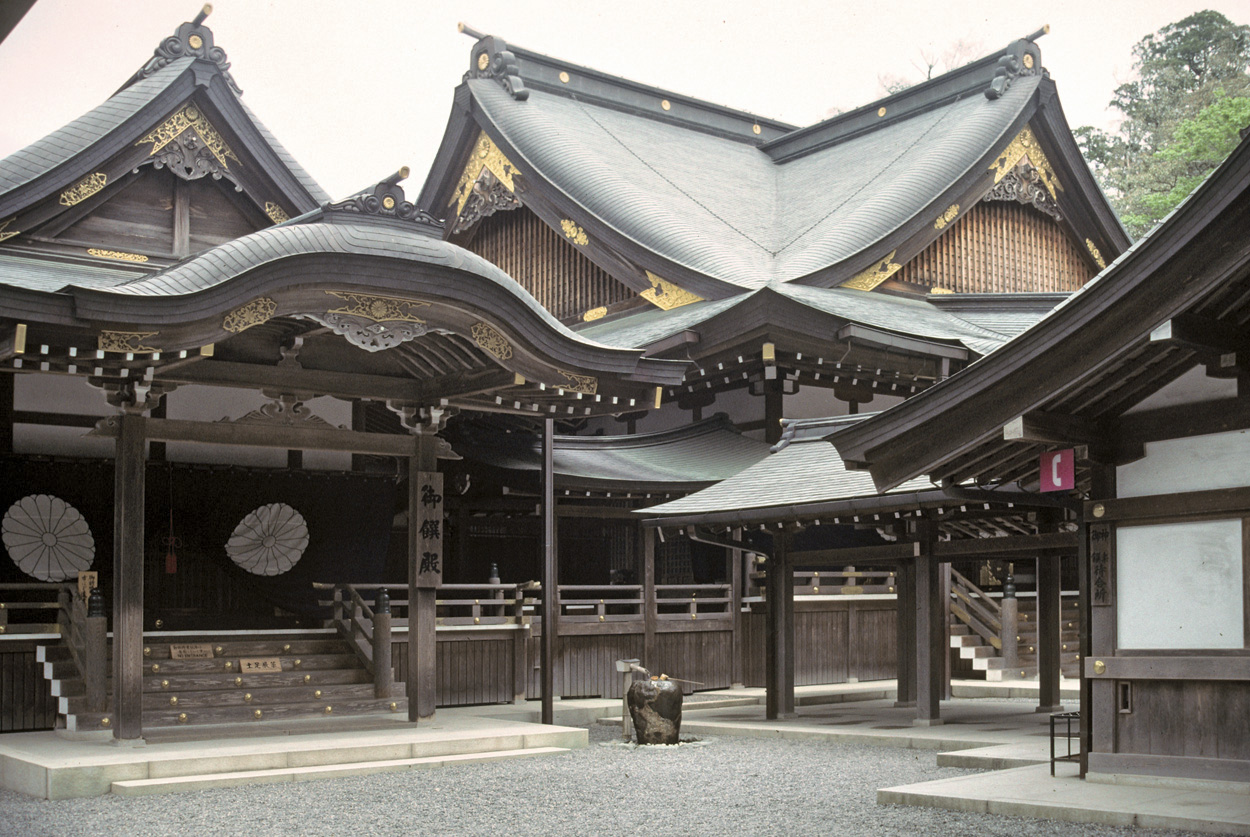
Ise Jingu
Japan's central Shinto sanctuary system, where Naiku, Geku, forest paths, deities, and annual rites shape the visit.
.jpg)
Kasuga-taisha
Nara's lantern-lined Shinto shrine, set where forest path, vermilion sanctuary buildings, and worship routes converge.
Regional journeys
Journeys in Japan
Kasuga-taisha Shrine Sequence
A Kasuga Taisha route through torii approach, subsidiary shrine, lantern hall, cloister, and worship-viewing space inside Nara's shrine landscape.
Itsukushima Shrine Sacred Sequence
An Itsukushima route through island shrine context, subsidiary devotion, corridor movement, main-sanctuary space, and the great torii threshold.
Keep exploring