Historical sanctuary
Alamo Mission in San Antonio
The Alamo is Mission San Antonio de Valero, a former Franciscan mission church and compound in downtown San Antonio whose sacred mission identity now sits beneath layers of fort use, battle memory, and public commemoration.

At a glance
- Official sourcethealamo.org
- Citations5 citations
- Hero imageCC BY-SA 4.0 via wikimedia-commons
- Latest source check2026-04-27
How to read this place: The sacred mission layer and the later military story occupy the same downtown site, so neither should erase the other.
Plan your visit
A Franciscan mission church whose public memory is dominated by battle, making the sacred layer easy to miss.
Respect essentials
What stands out
Why this place matters
The site belongs to the San Antonio Missions story as Mission Valero, preserving a mission-church identity older than the battle narrative.
Its sacred history remains visible when the former church and compound are held beside later fort, conflict, and memorial uses.
For visitors, the Alamo is a test of layered interpretation: mission, settlement, military event, and civic memory all occupy the same place.
Historical background
History
Mission Valero's place in the San Antonio mission chain gives the site its wider historical frame. UNESCO's listing treats the missions as a linked cultural landscape, which helps restore the Alamo to its river and settlement context. The other missions make the pattern easier to see: church, compound, work, conversion, agriculture, and community were connected. In downtown San Antonio that context can be hard to feel because the Alamo is surrounded by dense public memory, tourism, and urban movement. The page should therefore remind visitors that the famous chapel belonged to a mission system. The sacred layer is not a small preface to battle history. It is the foundation on which later uses were built.
The later military and commemorative history did not erase the mission, but it changed what most visitors expect to see. The Alamo became nationally known through the 1836 conflict and the memory built around it, while the building's church identity remained physically present in the same place. That overlap is the interpretive challenge. The official Alamo source, visual documentation, and entity records all connect the present site to a specific church and compound, but popular attention can flatten the place into a single patriotic symbol. A better historical reading keeps the layers together: mission church, colonial compound, fort use, battle site, memorial landscape, and public attraction. None of those layers should be allowed to cancel the others.
The site's current public history is managed through official visitor access, preservation, and interpretation. That makes practical planning part of understanding the place. Visitors should use the official Alamo website for current access, exhibits, and route information, but they should also use UNESCO's mission-chain context to avoid treating the site as detached from San Antonio's sacred and colonial landscape. The former church and compound footprint are compact, crowded, and easy to consume too quickly. A strong visit starts with the mission name, looks carefully at the chapel as religious architecture, then adds the military and memorial layers. That order gives the site more historical honesty than beginning and ending with the battle story.
The mission-chain frame also helps visitors understand why the Alamo cannot be interpreted only through a single surviving facade. UNESCO's San Antonio Missions property points to a network of religious communities, water systems, settlement patterns, and cultural exchange. Mission Valero was one piece of that network, even if downtown development and national memory have made it feel separate. Reading it beside the other missions restores scale. The chapel was part of a compound and a colonial religious project, not a freestanding symbol. That wider view also makes the Alamo more complex: sacred architecture, Indigenous history, Franciscan mission practice, military reuse, and commemoration all belong to the same ground.
Because the Alamo is so familiar, the page has to work against shorthand. The title most people know is not wrong, but Mission San Antonio de Valero is the name that opens the sacred and colonial history. The official site anchors current visitor use, while UNESCO supplies the broader mission context and Commons gives visual evidence for the chapel and compound setting. Together they support a layered reading with more than one theme. The best historical account therefore moves from mission foundation to compound, from compound to later fort use, from fort use to public memorial, and from public memorial back to the church fabric still standing in the middle of the city. That loop keeps the Alamo from becoming either a flat shrine to memory or a detached architectural relic.
Sacred meaning
Sacred context
The Alamo's sacred context is fragile because it is so easily overshadowed. Mission San Antonio de Valero was a Franciscan mission church and compound before it became the symbol most visitors know. UNESCO's mission-chain frame helps recover that older identity. The church facade should be read first as the remains of a mission sacred place, not only as a backdrop for battle memory. That does not deny the later history. It gives the later history a more honest base by showing what kind of place was transformed.
The sacred context also includes the difficult colonial mission setting. A mission was not only a chapel. It was a religious and social system tied to conversion, settlement, labor, and Indigenous communities. UNESCO's San Antonio Missions context is useful because it keeps Mission Valero connected to that wider pattern instead of isolating the Alamo as a single heroic monument. A respectful page should not romanticize the mission layer, but it should not erase it either. The sacred story is part of a colonial religious landscape with human costs and lasting public memory.
Visitor etiquette follows from that layered meaning. The former church and compound deserve quiet attention because they are sacred remains and memorial space at the same time. Photography, route choices, and interpretive language should avoid turning the chapel into a simple icon. The more useful practice is to pause at the church, read the compound as mission space, then connect the Alamo with the other San Antonio missions if time allows. That wider route restores the religious and settlement geography that downtown crowds can obscure.
The page should keep claims grounded in reliable sources and avoid invented devotional detail. The stable, source-backed point is that the Alamo is Mission San Antonio de Valero, part of the San Antonio Missions context, and now a managed public heritage site. Tradition-level etiquette can be simple: dress and behave respectfully in the former church, give memorial use room, and do not let battle memory erase the Franciscan and Indigenous mission context. That balanced frame is more useful than treating the Alamo as either only shrine, only fort, or only tourist landmark. It also gives visitors a practical way to stand in a crowded place without flattening the people and histories attached to it. The sacred context is strongest when it makes the familiar facade feel less familiar and more accountable to its mission setting and river-mission context.
FAQ
Sources
- Official websitePrimary visitor-facing site for current access and institutional context.
- UNESCO entryPrimary authority source for the San Antonio Missions World Heritage property and its component missions.
- Wikipedia entryWikipedia article for Alamo Mission in San Antonio.
- San Antonio Missions (Property 1466)Primary authority source for the San Antonio Missions World Heritage property and its component missions.
- Alamo Mission in San Antonio (Q2636724)Entity anchor for Mission San Antonio de Valero, also known as the Alamo.
- Category:The AlamoVisual context for Mission San Antonio de Valero / the Alamo church and compound.
- Alamo Mission in San AntonioWikipedia article for Alamo Mission in San Antonio.
- Official website of Alamo Mission in San AntonioOfficial website for Alamo Mission in San Antonio.
Nearby places
Nearby sacred places in Southwest United States
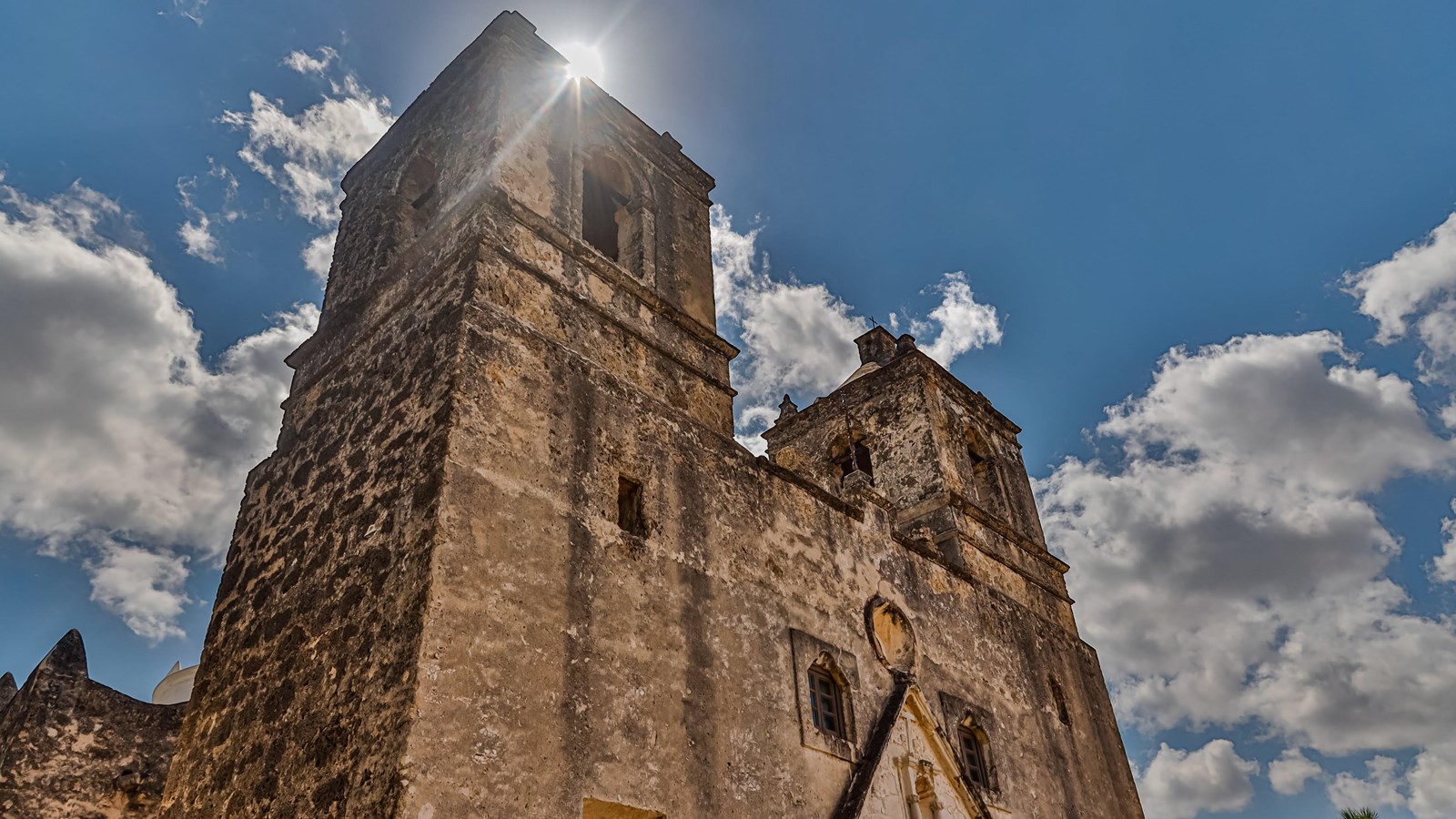
Mission Concepcion
A San Antonio mission where an old church continues in worship, with grounds and river history keeping the larger mission setting visible.
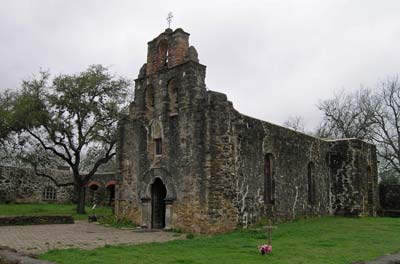
Mission San Francisco de la Espada
A quieter southern San Antonio mission where church life, irrigation traces, open grounds, and former fields remain part of one Catholic landscape.
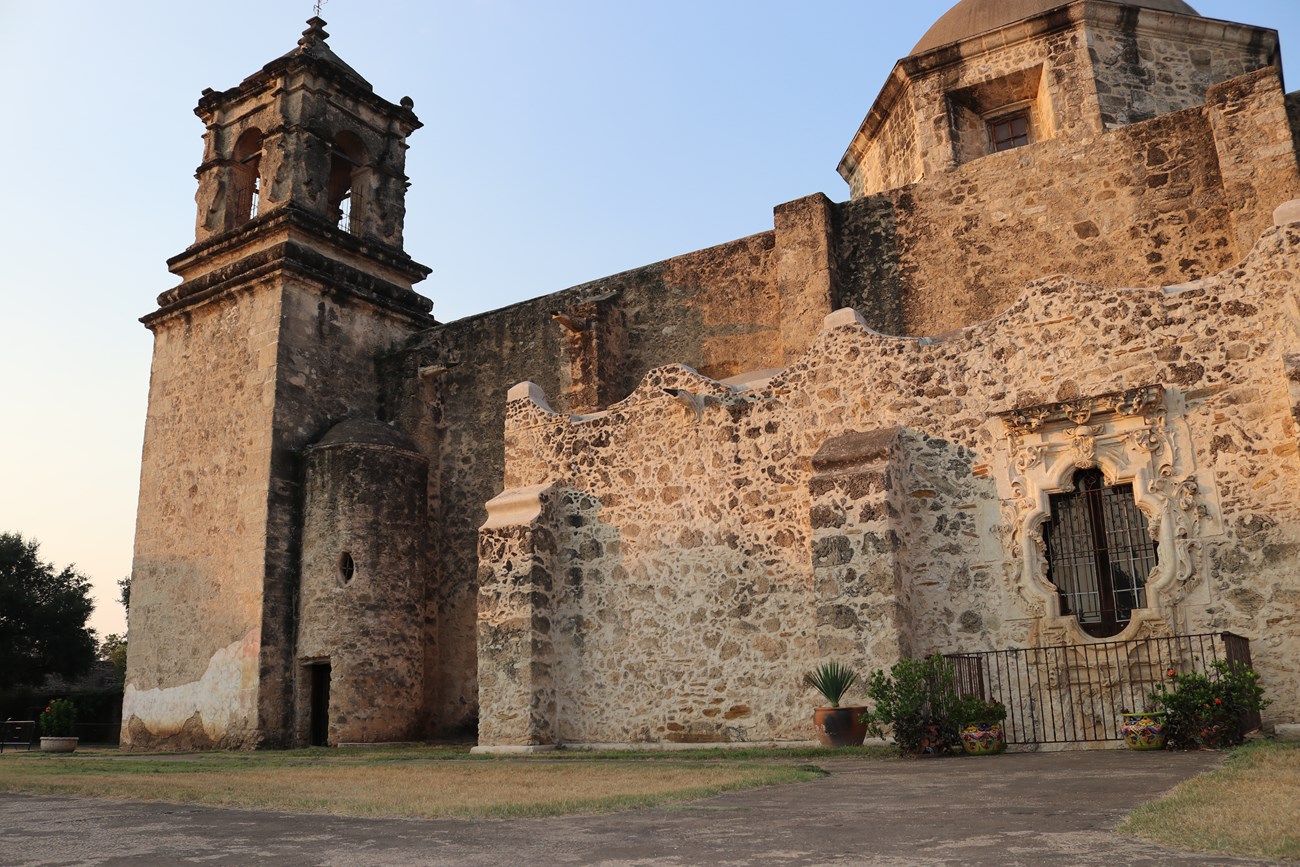
Mission San Jose y San Miguel de Aguayo
A substantial San Antonio mission enclosure where courtyards and walls still direct attention back to an active Catholic church.
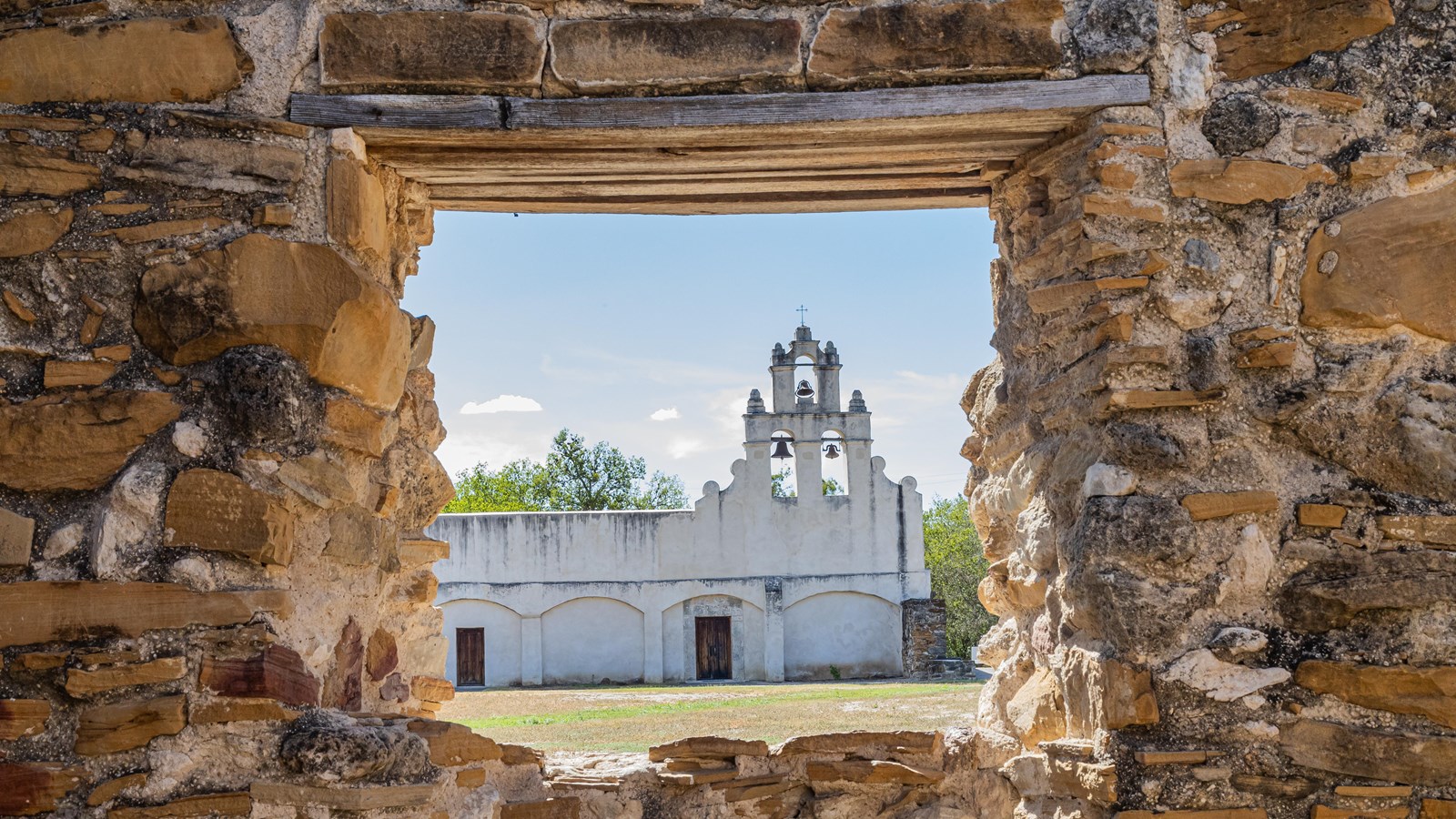
Mission San Juan Capistrano
On San Antonio’s southern mission route, San Juan offers a quieter parish church, broad grounds, and a landscape memory of fields and community life.
Same tradition elsewhere
Christianity sacred sites beyond Southwest United States
.jpg)
Abu Mena
A ruined Christian pilgrimage city where martyr devotion once organized worship, baptism, movement, and monastic life.
.jpg)
Archbishop's Chapel
A compact Ravenna chapel where mosaic detail and episcopal setting turn a small room into a concentrated sacred interior.
Keep exploring