Living sacred site
Mission San Francisco de la Espada
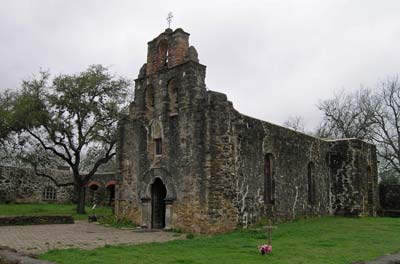
Mission San Francisco de la Espada stands at the southern end of the San Antonio mission chain, joining a parish church to grounds, acequia features, fields, and settlement memory.
At a glance
- Official sourcenps.gov
- Citations7 citations
- Hero imagePublic domain via official-site
- Latest source check2026-04-25
How to read this place: Espada's modest church gains depth from parish use and the surrounding mission landscape of water, work, and settlement.
Plan your visit
A southern San Antonio mission where parish worship, irrigation landscape, fields, and church continuity still explain one another.
Respect essentials
What stands out
Why this place matters
Historical background
History
Mission San Francisco de la Espada belongs to the southern end of the San Antonio mission chain, a group of Spanish colonial missions now interpreted by UNESCO as a cultural landscape of churches, living parish use, irrigation works, fields, and settlement space. The mission was part of the same eighteenth-century system that joined Catholic evangelization with agriculture, labor organization, defense, and community planning along the San Antonio River. For Espada, that wider frame matters because the site is not explained by its chapel alone. Its church, compound, acequia setting, and surrounding grounds reflect the mission program's attempt to sustain a Christian community through worship, water management, cultivated land, and daily work. The National Park Service describes Espada as a mission within San Antonio Missions National Historical Park, while UNESCO treats the San Antonio Missions as a serial property whose value lies in the relationship among built religious structures, associated lands, and water systems.
Espada's history also depends on continuity and change after the Spanish colonial period. The mission landscape did not freeze as an archaeological scene once the original mission system declined. The church remained part of a Catholic setting, and modern park documentation emphasizes that the four mission churches in the park are active parish churches under the Archdiocese of San Antonio. That status changes how the historic fabric should be read: Espada is both a protected public heritage place and a religious site whose church life survived into the present. The National Park Service travel material explicitly presents Mission San Francisco de la Espada as an active Catholic parish, so the visitor is encountering a place where conservation, interpretation, and worship share the same ground. This combination is one reason Espada can feel quieter than more monumental mission compounds while still carrying a dense historical story.
The mission's southern position within the San Antonio sequence gives it a distinct role. It sits away from the more visited central city sites and asks visitors to notice the whole mission environment: church, open ground, fields, irrigation, and movement along the mission route. UNESCO's listing for the San Antonio Missions emphasizes the set of missions as an ensemble, and Espada's identity is sharpened by comparison with the other components. The site-specific National Park Service page and image record keep the church visible, but the landscape around it is not background. The acequia system and field memory are part of how mission life worked, because water, food production, and settlement organization supported religious instruction and parish community. Reading Espada as only a small chapel would miss how the mission system joined sacramental life to ordinary labor and controlled space.
Modern Espada carries several layers at once. The National Park Service gives visitors the official park frame, UNESCO gives the international heritage frame, and parish documentation keeps worship at the center of the church. The site carries colonial mission history, Indigenous and local community history, Catholic continuity, and public-park interpretation at once. Those layers can be uncomfortable if treated too neatly, because the mission system was not only architecture and devotion; it was also a colonial institution that reorganized land, labor, belief, and identity. A careful history section should hold both truths: Espada preserves one of San Antonio's important Spanish colonial mission landscapes, and it remains a place where present-day Catholic practice keeps the church from becoming only a monument. That tension is the reason the grounds, the church, and the acequia setting need to be interpreted together.
The official sources also explain why Espada should be planned as part of a route, not as a quick single-object stop. UNESCO treats the missions as one property, while the National Park Service presents Espada through both a site page and a Spanish colonial missions travel itinerary. Those sources place the church within a network of mission communities and protected landscapes in San Antonio. Moving between Espada and the other missions helps visitors see what is shared, including parish continuity and mission planning, and what is particular, including Espada's quieter southern setting and open ground. That route-based reading makes the history more honest because the mission chain was designed as a system of related communities, not a set of isolated chapels with separate meanings across the river corridor.
Sacred meaning
Sacred context
Espada's sacred context starts with its church as a living Catholic parish within a protected mission landscape. National Park Service planning material states that the park missions include active parish churches, and the NPS travel page identifies Espada as an active Catholic parish. That means etiquette should follow a worship-first reading: services, prayer, parishioners, and clergy activity take priority over photography, interpretation, or moving through the building. The church is not a reconstructed stage set for colonial history. It is a sacred interior inside a public heritage site, so the practical visit should leave space for Mass, quiet prayer, and parish use.
The sacred meaning also extends beyond the chapel walls. UNESCO frames the San Antonio Missions as a cultural landscape, and Espada's mission identity includes grounds, irrigation features, and field memory. In Catholic mission history, worship, instruction, work, and settlement were linked in one environment. Visitors should therefore treat acequia traces and open mission grounds as part of the sacred-historical setting, not as empty space around the church. The landscape tells how a religious community was meant to live materially: water moved, fields supported people, and the church organized ritual time.
Respectful interpretation also means avoiding a purely romantic mission story. Espada's Catholic continuity is real, but the colonial mission system reshaped Indigenous lives, land use, language, and religious practice. The page should present the mission as both a sacred parish place and a heritage landscape with colonial power built into its history. For visitors, that means using measured language, following park and parish rules, and giving the site enough time to connect church, acequia, fields, and community memory. Espada is most meaningful when devotion, landscape, and difficult history are held in the same view.
A practical sacred reading also changes what counts as the visit's center. The church is the obvious focus, but the mission grounds show how Catholic mission life was organized around a community, not only a sanctuary. NPS and UNESCO sources both connect Espada to the larger San Antonio mission landscape, so visitors should read paths, fields, water features, and protected buildings as religious-historical evidence. The respectful pace is slower than a photo stop: pause at the church, then let the surrounding mission fabric explain how worship, work, instruction, and settlement were meant to reinforce one another across the whole mission setting, especially when parish activity is underway. That also means avoiding intrusive movement near worshippers or restricted park fabric.
FAQ
Sources
- Official websitePrimary visitor-facing site for current access and institutional context.
- UNESCO entryPrimary authority source for the San Antonio Missions World Heritage property and its component missions.
- Wikipedia entryWikipedia article for Mission San Francisco de la Espada.
- San Antonio Missions (Property 1466)Primary authority source for the San Antonio Missions World Heritage property and its component missions.
- San Antonio Missions National Historical Park planning overviewNPS planning document stating that the four park missions have active parish churches managed by the Archdiocese of San Antonio.
- Mission Espada | San Antonio Missions National Historical ParkOfficial NPS overview for Mission San Francisco de la Espada.
- Mission San Francisco de la Espada -- Spanish Colonial Missions of the SouthwestNPS travel-itinerary page explicitly noting that Mission Espada remains an active Catholic parish.
- Mission San Francisco de la Espada (Q2393728)Entity anchor for Mission San Francisco de la Espada in San Antonio.
- Category:Mission Espada, San Antonio, TexasVisual context for Mission Espada, its church, and surrounding grounds.
- Mission San Francisco de la EspadaWikipedia article for Mission San Francisco de la Espada.
Nearby places
Nearby sacred places in Southwest United States
Mission Concepcion
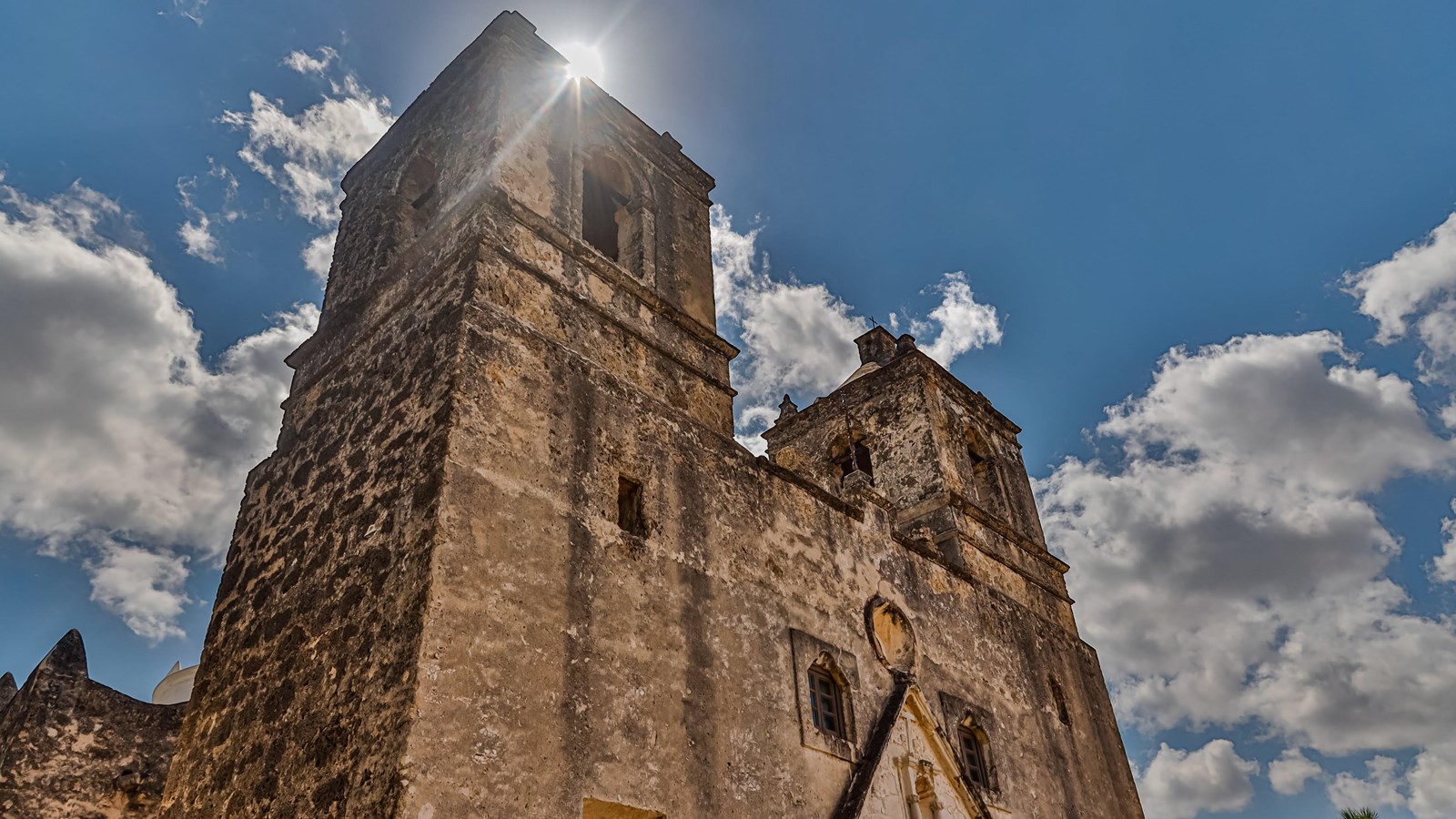
A San Antonio mission where an old church continues in worship, with grounds and river history keeping the larger mission setting visible.
Mission San Jose y San Miguel de Aguayo
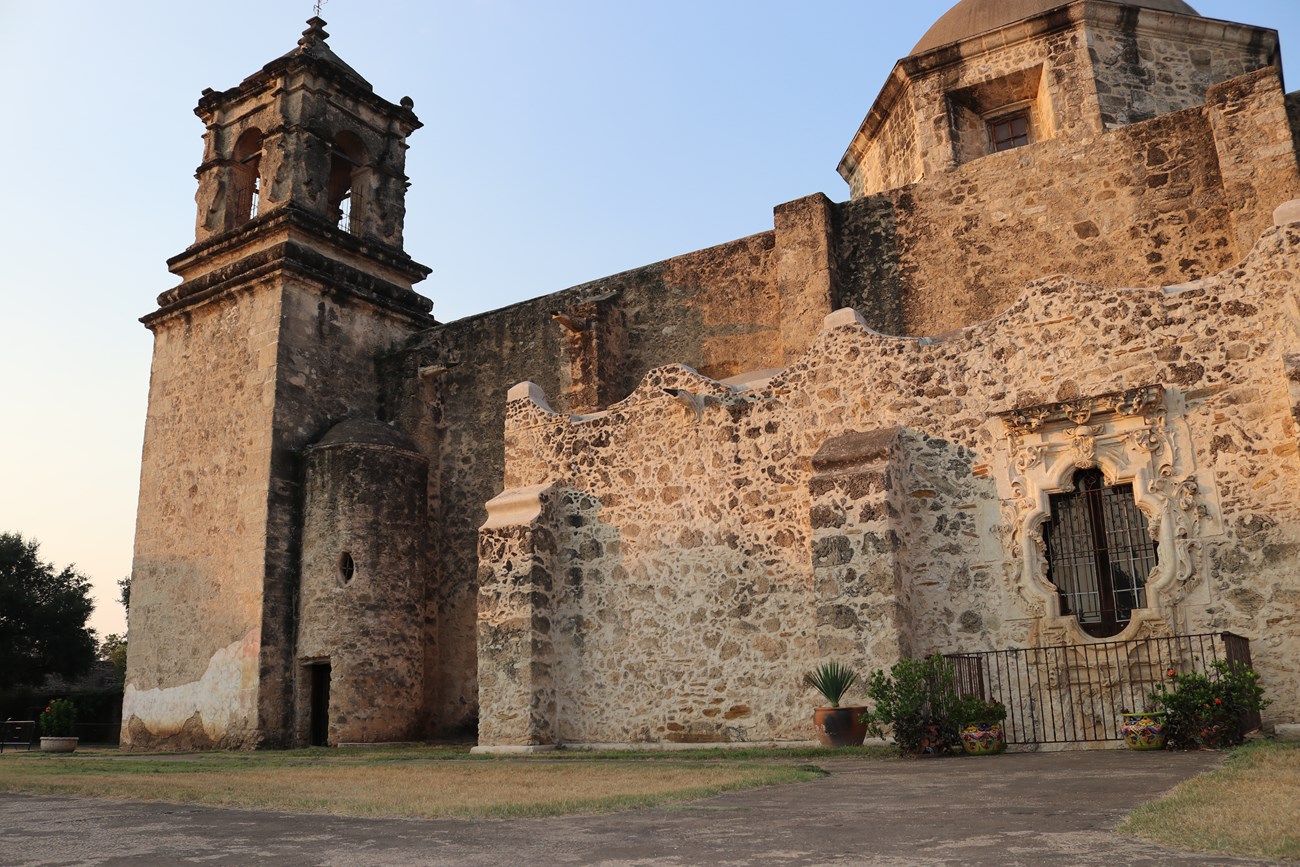
A substantial San Antonio mission enclosure where courtyards and walls still direct attention back to an active Catholic church.
Mission San Juan Capistrano
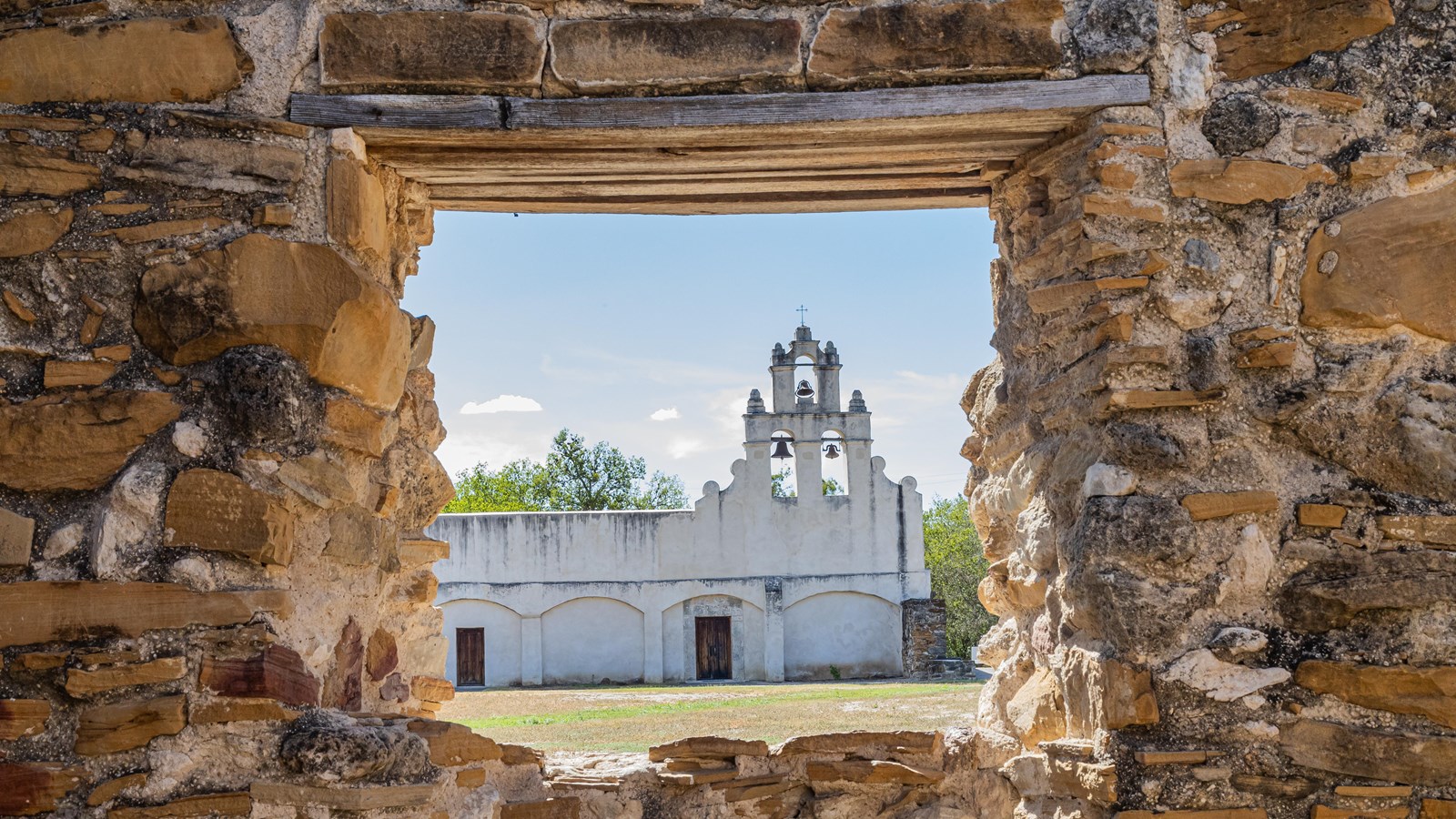
On San Antonio’s southern mission route, San Juan offers a quieter parish church, broad grounds, and a landscape memory of fields and community life.

San Antonio Missions
A UNESCO-listed Texas mission chain of churches, compounds, irrigation canals, parish life, and river-corridor heritage.
Keep exploring