Living sacred site
Mission Concepcion
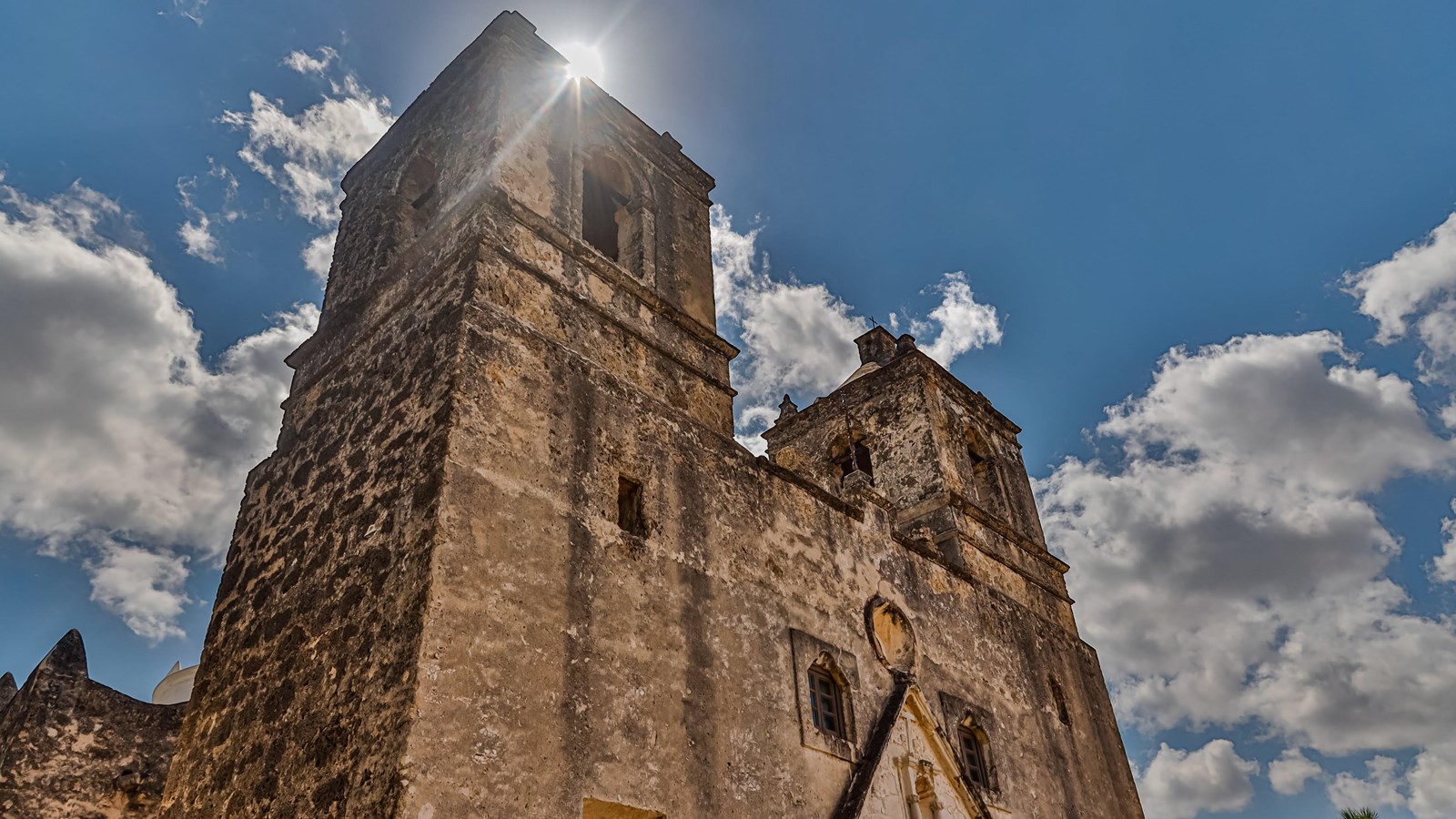
Mission Concepcion is one of the San Antonio Missions, preserving an old church, parish worship, surrounding remains, and river-corridor context within the city's mission landscape.
At a glance
- Official sourcenps.gov
- Citations9 citations
- Hero imagePublic domain via official-site
- Latest source check2026-06-21
How to read this place: Mission Concepcion links worship, old stone fabric, surrounding remains, and the wider San Antonio mission chain.
Plan your visit
A historic mission church where Catholic parish continuity keeps masonry and compound memory active.
Respect essentials
What stands out
Why this place matters
Historical background
History
Mission Concepcion is one of the clearest places in San Antonio to see how a mission church, convento, quarry, and lost compound walls once worked together. NPS identifies the site as part of the San Antonio Missions World Heritage property and calls the church one of the oldest unrestored stone churches in the United States. The mission was first founded in eastern Texas in 1716, then relocated to the present San Antonio site in 1731. That relocation matters because the building now visited is part of a broader Spanish colonial strategy in the San Antonio River valley, where missions were placed as religious communities, settlement anchors, labor systems, and territorial claims. UNESCO's listing treats the San Antonio missions as a cultural landscape instead of a row of isolated churches. Mission Concepcion fits that pattern: the remaining church, convento rooms, quarry, and traces of enclosure point to a mission town where architecture, worship, residence, food, labor, and colonial administration were joined in one plan.
The NPS description gives Concepcion a useful building chronology. The church and convento walls and roofs still stand after more than 250 years, and the mission period compound was originally walled. NPS says the walls were completed in 1745, the church was completed in 1755, and the walls were rebuilt in the early 1760s with living quarters along them after earlier walls were judged insufficient. Visitors now see only part of that system. The church, convento, and quarry remain, while the complete inhabited enclosure has largely disappeared. The quarry in front of the church supplied tuffaceous limestone for the mission structures, mortar, and plaster. Inside the convento, surviving rooms include the storeroom, porteria, library, and refectory. These details keep the page from treating Concepcion as just an old church. It was a built environment in which friars, Indigenous families, religious instruction, material production, food, and administration occupied connected spaces.
Concepcion's later history is also visible in what was preserved and what was lost. NPS notes that the mission was partly secularized in 1794 and fully secularized by Mexico in 1824. Before that transition, Mission Concepcion had housed the Father President of the College of Queretaro, who supervised the Queretaro missions in San Antonio: Concepcion, San Juan, and San Antonio de Valero, now better known as the Alamo. That administrative role gives the site importance beyond its architecture. The church's survival as an unrestored stone building also makes it a rare witness to eighteenth-century construction, paint, and sacred space. NPS calls attention to faded exterior frescoes and surviving interior frescoes, including the Eye of God in the convento library. Those painted remains are historical evidence of a mission world that used color, pattern, and image as part of religious teaching and spatial authority. Today, Concepcion sits inside a National Historical Park and UNESCO property, while the NPS planning material identifies the park missions as active parish churches under the Archdiocese. Its history therefore spans mission foundation, relocation, construction, secularization, preservation, interpretation, and continuing worship.
The physical survival of Concepcion makes those layers unusually readable. NPS emphasizes that the thick church and convento walls and roofs still stand after more than 250 years. It also identifies Mission Concepcion as one of the oldest unrestored stone churches in the United States. That status is historically useful because the building has not been turned into a complete reconstruction of the mission period. Weathering, faded paint, surviving rooms, and missing walls all remain part of the evidence. Visitors can see a church that served Catholic mission worship, a convento that supported Franciscan administration and daily life, a quarry that supplied material for the mission, and a landscape that once belonged to a much larger enclosure. The incompleteness is part of the history. It helps show how the mission moved from colonial institution to secularized property, then to protected public heritage and active parish setting.
Concepcion's official visitor context also helps place it within the full San Antonio mission chain. The NPS basic-information page explains that the park has four distinct visitor areas, each separated by several miles, beginning with Mission Concepcion south of downtown and continuing to San Jose, San Juan, and Espada. That geography matters historically because the missions were placed along the river corridor as connected communities, not as unrelated monuments. Concepcion's location, surviving church, convento rooms, and quarry therefore tell one part of a larger settlement system. UNESCO's World Heritage listing gives that system international recognition, while NPS interpretation keeps the local building sequence and visitor route specific.
Sacred meaning
Sacred context
Mission Concepcion's sacred context is concentrated in the church but carried by the whole surviving mission fabric. NPS describes a Spanish mission as a community, school, workplace, church, and now sacred burial grounds. That definition is especially useful here because the present site preserves the church, convento, and quarry while asking visitors to imagine the missing walled compound. The church was not only a place for occasional rites. It stood at the center of instruction, conversion, labor, meals, residence, and rule. UNESCO's World Heritage framing broadens the sacred reading by tying the missions to settlement, water systems, religious change, and cultural exchange in the San Antonio River valley. A visitor who only photographs the facade misses the heavier story: Catholic sacred space was embedded in a colonial mission system that reshaped Indigenous lives.
The frescoes give Concepcion a distinct devotional texture. NPS notes that colorful geometric designs once covered the church inside and out, with exterior frescoes now faded and interior frescoes still visible in several rooms. The best-known surviving example is the Eye of God in the convento library. These painted surfaces matter because they show how image, color, architecture, and teaching worked together in the mission setting. They were not neutral decoration. They framed sacred instruction for a community shaped by Franciscan Catholic practice and Spanish colonial rule. The NPS planning source also identifies the park missions as active parish churches, so the site should be approached as protected heritage and as a Catholic setting with ongoing religious use. That means the church interior, frescoed rooms, services, and parish activity need more care than ordinary historic-room sightseeing.
Respect at Concepcion should be practical, not vague. The NPS basic-information page warns that the mission structures are more than 250 years old, that even reconstructed structures are nearly a century old, and that surfaces are uneven, walls may crumble, and entrance heights vary. It also asks visitors not to sit, stand, or climb on structures. Those are preservation rules, but they are also sacred-context rules at a site where church, mission residents, burial memory, and parish worship overlap. Give services and prayer priority. Keep distance from fragile frescoes and stone. Walk bikes where NPS asks visitors to do so inside the missions. Read the quarry, convento, and church as one religious landscape. Concepcion is strongest when the visitor sees the remaining stone church not as a frozen artifact, but as a place where worship, colonial mission history, Indigenous experience, and public stewardship meet in the same small precinct.
FAQ
Sources
- Official websitePrimary visitor-facing site for current access and institutional context.
- UNESCO entryPrimary authority source for the San Antonio Missions World Heritage property and its component missions.
- Wikipedia entryWikipedia article for Mission Concepcion.
- San Antonio Missions (Property 1466)Primary authority source for the San Antonio Missions World Heritage property and its component missions.
- San Antonio Missions National Historical Park planning overviewNPS planning document stating that the four park missions have active parish churches managed by the Archdiocese of San Antonio.
- Mission Concepcion | San Antonio Missions National Historical ParkOfficial NPS overview for Mission Concepcion and its present site.
- Mission Concepcion (Q2312403)Entity anchor for Mission Concepcion in San Antonio.
- Category:Mission Concepcion, San Antonio, TexasVisual context for the church, grounds, and mission fabric at Mission Concepcion.
- Mission ConcepcionWikipedia article for Mission Concepcion.
- Operating Hours & Seasons - San Antonio Missions National Historical ParkOfficial NPS hours page for current park hours, grounds access, closures, and alert fallback.
- Fees & Passes - San Antonio Missions National Historical ParkOfficial NPS fee page stating that no entrance pass is required for San Antonio Missions National Historical Park.
- Basic Information - San Antonio Missions National Historical ParkOfficial NPS visitor context for the four mission areas, fragile structures, uneven surfaces, and preservation rules.
Nearby places
Nearby sacred places in Southwest United States
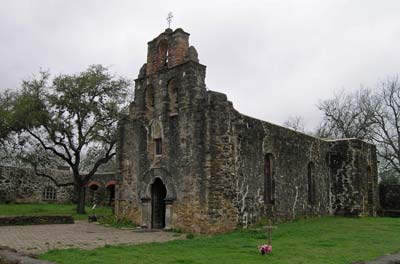
Mission San Francisco de la Espada
A quieter southern San Antonio mission where church life, irrigation traces, open grounds, and former fields remain part of one Catholic landscape.
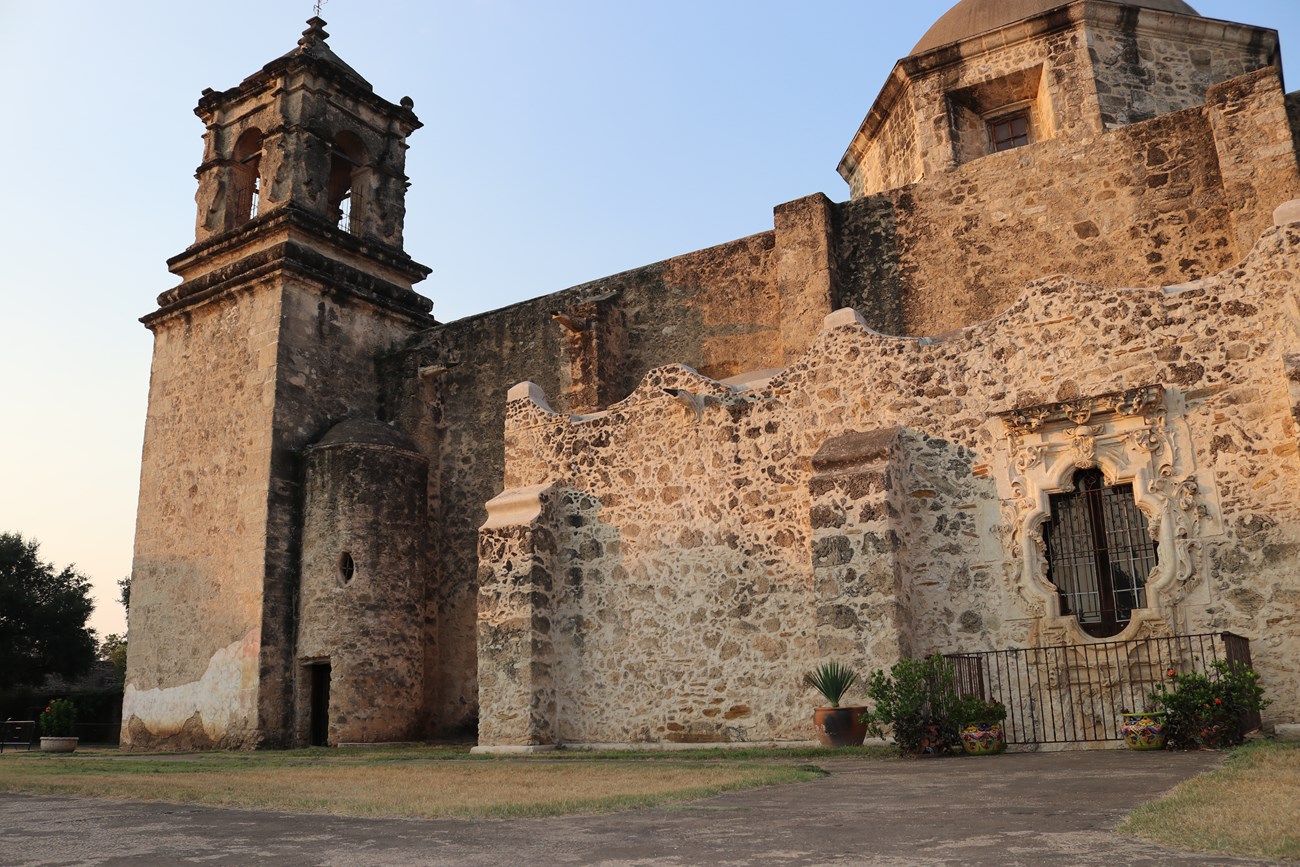
Mission San Jose y San Miguel de Aguayo
A substantial San Antonio mission enclosure where courtyards and walls still direct attention back to an active Catholic church.
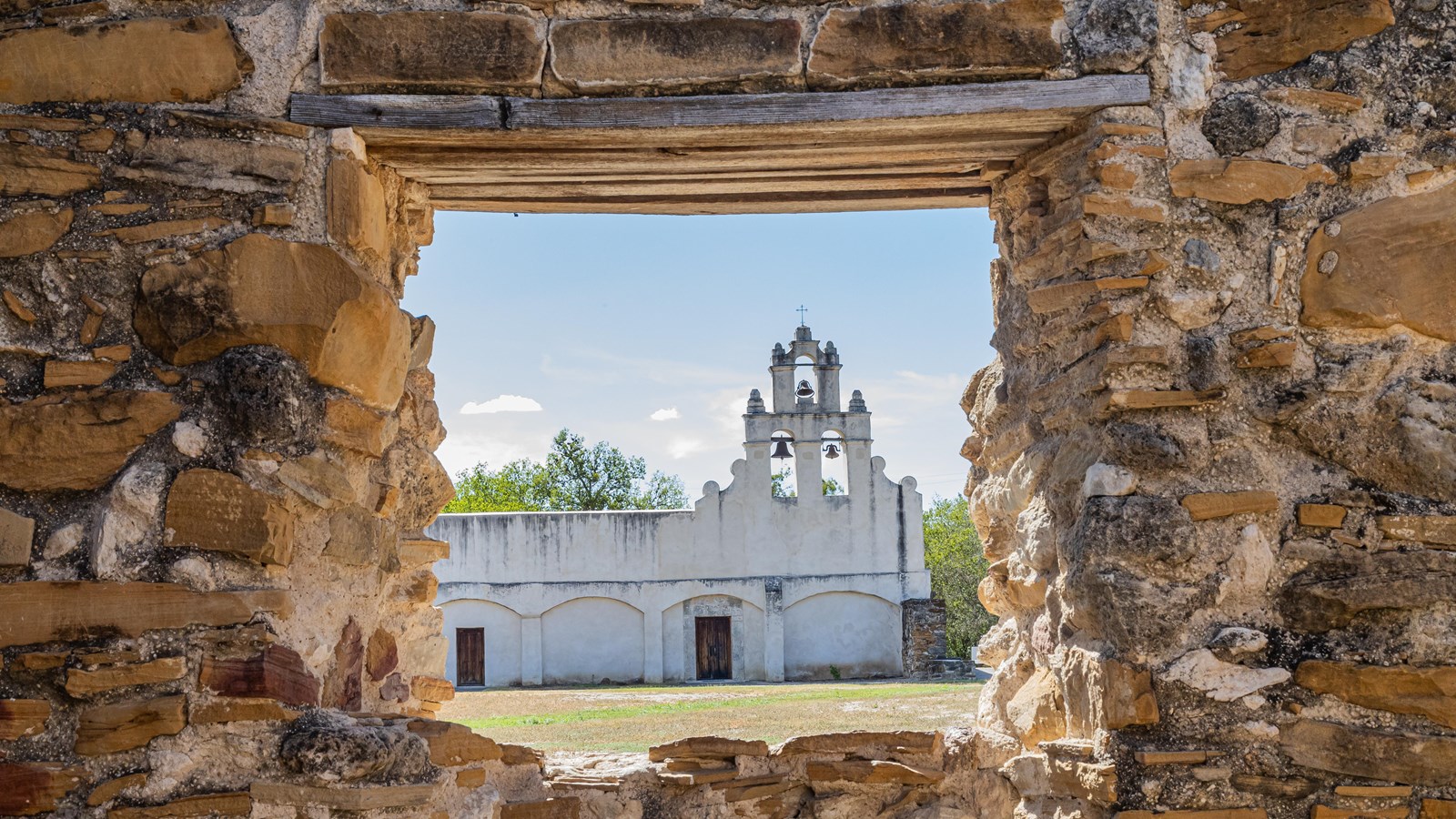
Mission San Juan Capistrano
On San Antonio’s southern mission route, San Juan offers a quieter parish church, broad grounds, and a landscape memory of fields and community life.

Alamo Mission in San Antonio
Mission Valero's church and compound survive inside the famous Alamo story, restoring the Franciscan layer beneath battle memory.
Same tradition elsewhere
Christianity sacred sites beyond Southwest United States

Baroque Churches of the Philippines
Four Philippine Catholic churches showing how one colonial building tradition adapted to different regions.
%20pic%201.JPG)
Basilica and Convent of San Francisco, Quito
From a broad stone apron to museum rooms and procession memory, Quito's San Francisco rewards a slow plaza-first approach.
Keep exploring